
Why Is My Ceiling Stained When My Roof Looks Fine
A brown ring on the ceiling is one of the most confusing problems a homeowner can face. You walk outside, look up at your shingles, and everything appears normal from the driveway. No missing shingles, no obvious holes, nothing that screams roof leak. Yet the stain on your ceiling keeps growing after every summer storm that rolls through West Texas. The truth is that most roof leaks are invisible from the ground, and water rarely drips straight down from the point of entry. Water travels along rafters, decking, and insulation before it ever touches your drywall. That means the stain in your living room could come from a failure ten feet away on the roof. Understanding where ceiling stains actually come from is the first step toward fixing them for good.
Hidden Roof Leaks That Cause Ceiling Stains
A roof can look fine and still leak. Most leaks start small, at seams, penetrations, and fasteners that no one can see from street level. West Texas summers make this worse because intense heat expands roofing materials during the day and cools them at night, opening tiny gaps over time. Then a fast monsoon storm dumps an inch of rain in twenty minutes, and water finds every one of those gaps. The water soaks the decking, runs along framing, and pools on top of your ceiling drywall. By the time a stain appears, moisture has often been collecting for weeks. If your ceiling is stained, need roof repair? Click here for our roof repair service.
Flashing Failures Behind Ceiling Stains
Flashing is the thin metal that seals the joints where your roof meets chimneys, vents, walls, and valleys. These joints are the weakest points on any roof because they rely on metal, sealant, and shingles working together perfectly. When flashing lifts, cracks, or rusts, water slips underneath and enters the attic without disturbing a single shingle. From the ground, the roof still looks flawless because the failure is hidden under the shingle line. West Texas heat is brutal on the sealants used around flashing, drying them out and causing them to crack years before the shingles wear out. A hailstorm or high wind event can also bend flashing just enough to break the seal. This is why a roof can pass a quick glance and still pour water into your ceiling. Flashing failure is one of the most common causes of ceiling stains we find in Odessa and Midland homes.
Chimney flashing deserves special attention because chimneys create a large interruption in the roof surface. Water hits the back of the chimney, and if the flashing or cricket behind it has failed, that water dives straight into the structure. The stain usually shows up on the ceiling near the fireplace, but not always. Water can run down the chimney chase and appear on a ceiling in a completely different room. Plumbing vent boots are another frequent offender because the rubber gasket around the pipe bakes in the sun. After eight to ten years of Texas heat, that rubber cracks and lets water run down the outside of the pipe. The leak is slow, steady, and invisible until the ceiling stain forms. Homeowners almost never catch these failures without getting on the roof.
Valley flashing failures cause some of the largest ceiling stains because valleys carry the highest volume of water on the roof. Every drop of rain from two roof planes funnels into the valley, so even a small gap moves a lot of water. Debris like leaves and gravel can trap moisture in the valley and accelerate corrosion in the metal. Once a pinhole forms, storm after storm pushes water through it. The decking below the valley rots first, then the water spreads across the attic floor. Stains from valley leaks often appear as long streaks rather than round rings. Repairing a valley requires removing shingles and rebuilding the water channel correctly, which is not a caulk and patch job. A professional roofer can spot valley wear during an inspection long before your ceiling ever stains.
Nail Pops and Pinhole Roof Leaks That Cause Ceiling Stains
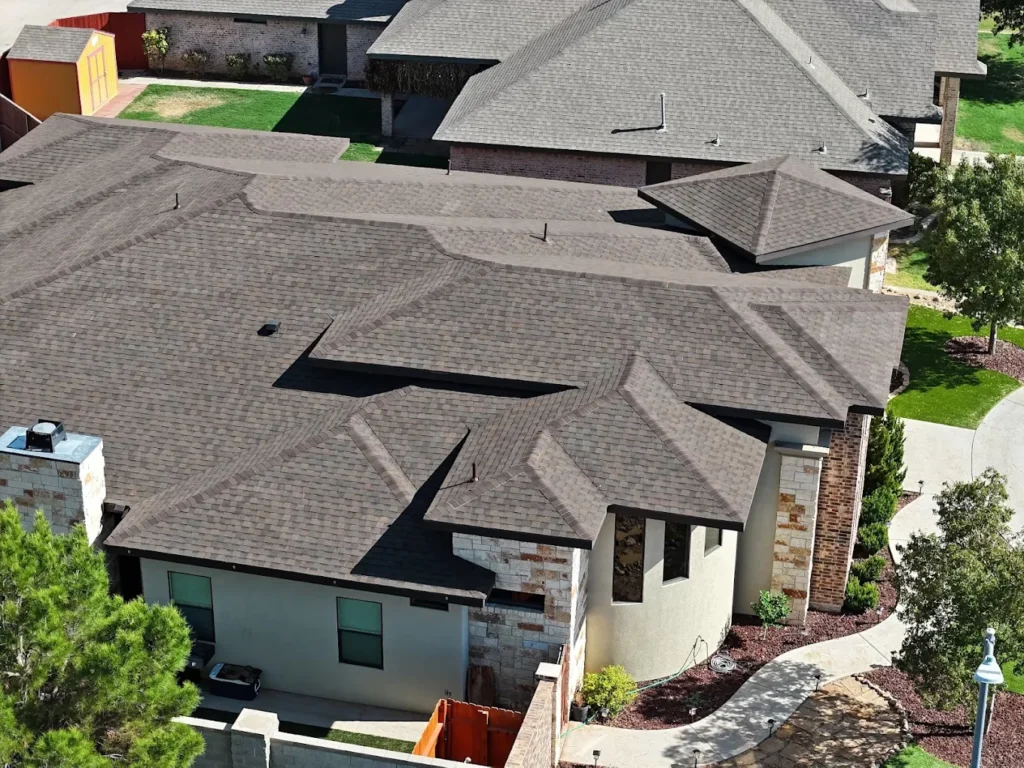
Nail pops are tiny failures with big consequences. As roof decking expands and contracts through West Texas temperature swings, nails slowly back out of the wood. A raised nail lifts the shingle above it and creates a small tent that wind driven rain can enter. In other cases, the nail head punches through the shingle entirely, leaving a hole the size of a pencil eraser. That hole is invisible from the ground and easy to miss even up close. During a heavy storm, water pumps through that opening with every gust. One popped nail can put gallons of water into an attic over a season. Multiply that by a dozen nail pops across an aging roof, and ceiling stains become inevitable.
Pinhole leaks also form where shingles have lost their protective granules. Granules shield the asphalt layer from ultraviolet rays, and the Permian Basin sun destroys exposed asphalt quickly. Bald spots on shingles crack, blister, and eventually open small fissures that pass water. These fissures are far too small to see from the driveway. Hail impacts create the same problem by bruising the shingle mat and knocking granules loose in a circular pattern. The shingle may not look damaged for months, then the bruised spot fails during a routine rain. This is why ceiling stains often appear long after the storm that actually caused the damage. Insurance claims can get complicated when the damage and the stain are separated by that much time.
The path water takes from a pinhole leak makes diagnosis even harder. Water enters at the hole, then follows the underlayment or the top of the decking downhill. It can travel several feet before finding a seam or a nail to drip from. Once it drips into the attic, it may land on insulation and wick sideways again. The final stain location on your ceiling can be eight or ten feet from the actual roof defect. Homeowners who patch the roof directly above the stain often fix nothing at all. Finding the true entry point requires attic inspection with a flashlight, moisture readings, and experience reading water trails. A trained roofer traces the stain backward to the source instead of guessing. That is the difference between a repair that lasts and a stain that keeps coming back.
Ceiling Stains From Storm Damage You Cannot See From the Ground
West Texas storms cause damage that hides in plain sight. Hail does not always shatter shingles or leave visible dents on a dark roof. More often, hail bruises the shingle, fracturing the fiberglass mat underneath while the surface looks mostly intact. Those fractures let water seep through slowly over the following weeks and months. Wind damage works the same way; a gust can break the adhesive seal between shingle courses without blowing anything off. The shingles lie back down and look normal, but the seal is gone. The next rain drives water under the unsealed edges. Your roof passed the driveway test, and your ceiling still stained.
Summer monsoon storms in the Permian Basin bring a dangerous combination of hail, straight line winds, and heavy rain in a single event. A storm in June can crack a vent boot, lift flashing, and bruise fifty shingles in ten minutes. None of that shows from the ground. The rain that follows the hail immediately tests every one of those new weak points. This is why so many ceiling stains appear during storm season even on roofs that are only a few years old. Age is not the only factor; a single severe storm can compromise a healthy roof. Homeowners in Odessa, Midland, and Andrews see this pattern every summer. Documenting damage quickly also matters for insurance, because most policies have deadlines for storm claims.
Widespread storm damage sometimes pushes a roof past the point of economical repair. When hail bruising covers multiple slopes or wind has broken seals across the whole field, patching individual spots becomes a losing battle. Each repair fixes one leak while a dozen weakened areas wait to fail. In those cases, a full replacement protects the home better and often costs less over time. A reputable roofer will show you photos of the damage and explain the math honestly. PB Roofing applies the full cost of any roof repair as credit toward a future replacement, so choosing a repair first never wastes your money. If your roof has widespread storm damage, click here for our roof replacement service. Getting an expert evaluation after every major hailstorm is the smartest habit a West Texas homeowner can build.
Ceiling Stains That Are Not Caused By a Roof Leak
Not every ceiling stain traces back to the roof, and this surprises many homeowners. Air conditioning systems, plumbing lines, and poor attic ventilation all put moisture above your ceiling. In summer, AC related stains are actually more common than roof leaks in some West Texas neighborhoods. The stain looks identical either way: a brown or yellow ring spreading across the drywall. Guessing wrong wastes money on repairs that solve nothing. A proper diagnosis rules out each source one at a time, starting in the attic. Knowing the difference between roof stains and mechanical stains saves you from paying for the wrong fix. Here is how each nonroof source creates ceiling stains and how to tell them apart.
AC Condensation and Ceiling Stains in Summer
Most West Texas homes have their air conditioning air handler in the attic, directly above the ceilings it can stain. During July heat, that unit runs almost nonstop and pulls gallons of moisture out of your indoor air every day. All of that water collects in a condensate drain pan and flows out through a small drain line. When that drain line clogs with algae, dust, or debris, the pan overflows. The overflow drips straight onto insulation and drywall below. Because the AC runs daily, the leak is constant and the stain grows fast. A roof leak stains after rain; an AC leak stains during dry, hot weeks. That timing difference is one of the best diagnostic clues you have.
Ductwork sweating is another summer stain source that mimics a roof leak. Cold air moving through poorly insulated ducts chills the metal surface below the dew point of the hot attic air. Water condenses on the duct exterior just like it does on a cold glass of tea. That condensation drips onto the ceiling below, hour after hour, all summer long. The stains often follow the path of the duct runs, appearing in lines or clusters. Uninsulated refrigerant lines cause the same sweating effect near the air handler. Homeowners see these stains, assume the roof failed, and call a roofer in a panic. A quick attic inspection reveals wet ducts and a dry roof deck, which settles the question immediately.
Telling AC stains apart from roof leak stains comes down to timing, location, and attic evidence. Check when the stain grows: after storms points to the roof, during hot dry stretches points to the AC. Check the location: stains near the hallway or closet where the air handler sits usually mean condensate problems. Then look in the attic with a flashlight during daylight hours. A roof leak shows water trails on the decking and rafters above the stain. An AC leak shows a full drain pan, wet insulation around the unit, or dripping ducts. If you find a dry roof deck and a swampy air handler, call an HVAC technician instead of a roofer. If you find dark streaks on the wood above, the roof is your problem and a roofer should take over from there.
Plumbing Leaks That Look Like Roof Leak Ceiling Stains
Water supply lines and drain pipes run through attics and between floors in many West Texas homes. A pinhole leak in a copper line or a loose fitting on a PEX connection releases water slowly and quietly. That water lands on the ceiling drywall and creates a stain identical to a roof leak. Supply line leaks are especially deceptive because they drip constantly, rain or shine. The stain grows steadily regardless of weather, which is your biggest clue. Roof stains pulse with storms; plumbing stains never take a day off. Homes with second floor bathrooms see this often when a stain forms on the first floor ceiling. Tub drains, toilet seals, and shower pans all fail with age and stain the ceiling below.
Water heaters located in attics are a major stain risk that deserves its own warning. Many area homes have the water heater platform mounted above the garage or a hallway. When the tank ages past ten years, corrosion eats through the steel and slow seepage begins. The drain pan under the unit catches some water, but pans overflow and drain lines clog just like AC pans do. A stained ceiling under an attic water heater is an emergency, not a curiosity. A tank that fails completely can dump forty gallons through your ceiling in minutes. Check the manufacture date on your tank and inspect the pan twice a year. Replacing an aging attic water heater is far cheaper than replacing a collapsed ceiling and soaked flooring.
Diagnosing a plumbing stain follows the same detective process as a roof stain. Map the stain location against your home’s plumbing layout: bathrooms, kitchens, laundry rooms, and water heater locations. Watch the stain over a two week period and note when it darkens or spreads. Run water fixtures above the stain one at a time and check for growth afterward. Shut off the main water supply overnight and see if an actively wet stain dries up; if it does, plumbing is the culprit. In the attic, follow pipes with a flashlight and feel fittings for moisture. Green or white crust on copper joints marks slow leaks that have been active for months. When plumbing checks out clean and the stain still grows after rain, the roof moves back to the top of the suspect list.
Attic Ventilation Problems That Create Ceiling Stains
Poor attic ventilation stains ceilings without a single drop of rain entering the home. An attic needs continuous airflow from soffit intake vents up through ridge or box vents at the peak. When those vents are blocked, undersized, or missing, moisture from daily living gets trapped above your ceiling. Cooking, showering, and laundry push humid air upward through every gap in the ceiling plane. In a sealed attic, that humidity condenses on cool surfaces like nail tips, ductwork, and the underside of the decking. The condensation drips onto insulation and drywall, creating scattered stains across multiple rooms. Homeowners chase these stains for years thinking they have a dozen tiny roof leaks. The real problem is trapped air, and no shingle repair will ever fix it.
West Texas summers create a specific ventilation failure that many people never consider. Attic temperatures here can exceed 150 degrees on a July afternoon when ventilation is inadequate. That superheated attic sits directly against air conditioning ducts and equipment, forcing the system to sweat harder and work longer. The temperature difference between chilled ducts and blazing attic air maximizes condensation on every cold surface. More condensation means more dripping and more ceiling stains. Extreme attic heat also cooks your shingles from underneath, shortening roof life by years. Curling, cracking, and premature granule loss on a relatively young roof often points to a ventilation problem below. Fixing ventilation protects the ceiling and the roof at the same time.
Bathroom and kitchen exhaust fans cause a sneaky version of this ventilation stain. Builders sometimes vent these fans into the attic instead of through the roof, or the duct disconnects over time. Every hot shower then pumps a cloud of steam directly into the attic space. That steam condenses on the nearest cold surface and drips back down, usually staining the ceiling right around the fan housing. A stain circling a bathroom exhaust fan is a classic sign of this exact failure. The fix is routing the duct through a proper roof vent with a sealed cap. Correct vent installation matters because a badly cut roof penetration creates the very leak you were trying to avoid. Proper ventilation design is part of every quality roof job; click here for our roof installation service to see how a correctly built roof system manages airflow from day one.
Why You Need a Professional Roof Inspection for Ceiling Stains
A ceiling stain is a symptom, and treating symptoms without a diagnosis wastes money. The source could be flashing, a nail pop, hail bruising, AC condensation, plumbing, or ventilation. Each cause requires a completely different repair from a different type of professional. Guessing wrong means the stain returns, the drywall keeps absorbing water, and mold gets a foothold in your insulation. A professional roof inspection identifies the true source in a single visit using attic access, moisture meters, and trained eyes. Every day a stain grows, the repair bill behind it grows too.
What a Roof Inspection for Ceiling Stains Includes
A thorough inspection starts inside, not on the roof. The inspector examines the stain, measures moisture levels in the drywall, and notes the pattern of spread. Ring shaped stains, streaks, and clustered spots each tell a different story about the water source. Next comes the attic, where a flashlight reveals water trails on rafters and decking. Wet insulation gets traced backward to its highest point of moisture. This inside work narrows the search before anyone climbs a ladder.
On the roof, the inspector checks every penetration, valley, and flashing detail above the stained area. Shingles get examined for hail bruising, broken seals, nail pops, and granule loss that cannot be seen from the ground. Vent boots are flexed to check for cracked rubber, and sealants are tested for adhesion. The inspector photographs everything so you can see exactly what they found. Documentation like this also becomes critical evidence if the damage supports an insurance claim. You get a clear diagnosis instead of a guess.
The inspection ends with an honest recommendation and a written estimate. Sometimes the fix is a single boot replacement that takes an hour. Sometimes the roof needs section repairs, and sometimes storm damage justifies a full replacement claim. A trustworthy roofer explains the options, shows the evidence, and lets you decide without pressure. PB Roofing provides a free, no obligation estimate on every project, so the diagnosis costs you nothing. That free inspection is the cheapest insurance a stained ceiling can buy.
The Cost of Ignoring Ceiling Stains
A ceiling stain never fixes itself, and waiting always raises the price. Wet drywall sags, crumbles, and eventually collapses under its own weight. Saturated insulation loses its insulating value permanently and must be replaced. Water reaching electrical junction boxes in the ceiling creates a genuine fire and shock hazard. What started as a fifty dollar section of drywall becomes a multiroom restoration project. The roof defect feeding the stain also spreads, rotting decking one storm at a time.
Mold is the hidden cost that scares homeowners the most, and it should. Mold colonies can establish themselves on damp drywall and wood within a couple of days of wetting. Once mold spreads through insulation and framing, remediation costs jump into the thousands. Spores circulating through your AC system affect air quality in every room of the house. Family members with allergies or asthma feel the effects first. Stopping the water quickly is the only reliable way to stop the mold.
Structural rot is the endgame for an ignored leak. Roof decking that stays wet loses strength and can no longer hold nails securely. Rafters and top plates rot next, compromising the framing that holds the roof up. At that stage, a repair that once cost a few hundred dollars requires structural carpentry plus a new roof section. Insurance companies may also deny claims when damage shows long term neglect. Acting on a stain the week you notice it protects both your home and your coverage.
Why Choose PB Roofing
PB Roofing serves Odessa, Midland, Andrews, and communities across the Permian Basin with honest, expert roofing work. We hold an A+ rating with the Better Business Bureau, earned through years of straight answers and quality workmanship. Our crews know exactly how West Texas heat, hail, and monsoon storms attack local roofs. That local knowledge means faster diagnosis and repairs built for this climate. When we inspect a stained ceiling, we tell you the truth about the source, even when the answer is not the roof. Ethos matters here; we would rather lose a job than sell you a repair you do not need.
Our credentials back up the promise. PB Roofing is a preferred contractor for both IKO and Owens Corning, two of the most respected shingle manufacturers in the industry. That status means our installation quality has been vetted and our customers qualify for enhanced material warranties. We also back every replacement job with a 4 year labor warranty, so workmanship issues are covered long after the crew leaves. Every project starts with a free, no obligation estimate. You get expert eyes on your roof and a written plan without spending a dime.
Our roof repair credit program makes the decision even easier for homeowners watching their budget. Every dollar you spend on a roof repair with us gets applied as full credit toward a future replacement. Fix the leak today, and that money still works for you when replacement time comes. No other approach protects your ceiling now and your wallet later. Call PB Roofing at (432) 853-7270 or email seanjr@roofingpb.com to schedule your free inspection. Stop guessing about that ceiling stain and get a real answer this week.