
How Big Temperature Swings Cause Roof Damage in West Texas
West Texas puts a roof through a daily workout that most of the country never experiences. A summer afternoon in Odessa can push shingle surface temperatures past 160 degrees, and by the following sunrise that same roof surface may have cooled into the sixties or low seventies. That swing repeats the next day, and the day after that, hundreds of times every year, and every single material on your roof responds by expanding and then contracting. Wood, asphalt, steel, aluminum, and rubber all move at different rates and in different directions, so the connections holding them together slowly work themselves loose over time. This kind of damage almost never announces itself with a dramatic leak on the first day. It builds quietly across seasons until a hail event or a hard blowing rain finds the weak spot that thermal movement created years earlier. Homeowners across the Permian Basin regularly blame a single storm for a roof failure that heat cycling had already set up long before the clouds rolled in. Understanding how expansion and contraction wear down a roofing system gives you a real chance to catch problems while they are still inexpensive repairs.
How Temperature Swings Cause Roof Damage to Shingles, Metal, and Decking
Every roofing material carries its own coefficient of thermal expansion, which is a technical way of saying that each component grows and shrinks at its own pace when the temperature climbs or falls. Asphalt shingles, steel flashing, aluminum drip edge, plywood decking, and rubber pipe boots are all fastened together into one assembly, yet not one of them moves in unison with the others. On a single August day in the Permian Basin, that entire assembly can travel through a hundred degree range and then reverse the whole trip after dark. The stress does not present itself as one dramatic failure that you can point to. It shows up as fractions of an inch of movement at every seam, fastener, lap, and joint, repeated tens of thousands of times across the service life of the roof. Over ten or fifteen years in this climate, those tiny repeated movements add up to backed out nails, split sealant beads, and shingles that no longer lie flat and tight against the deck below them.
Thermal Cycling and Temperature Swing Roof Damage in Asphalt Shingles
An asphalt shingle is a fiberglass mat saturated with asphalt and topped with ceramic coated granules, and each of those layers reacts to heat in its own way. When the sun heats the roof surface, the asphalt softens and becomes more pliable, allowing the shingle to expand slightly along its length and width. As the temperature drops overnight, the asphalt stiffens again and the shingle pulls back toward its original dimensions, dragging against the nails that hold it and the shingle courses above and below it. That cycle is exactly what shingles are engineered to survive, but engineering assumes a reasonable number of cycles at reasonable temperatures. West Texas delivers an aggressive version of that test, with intense ultraviolet exposure, low humidity, high elevation, and a daily temperature range that frequently exceeds thirty degrees even outside of summer. The self sealing adhesive strip on the underside of each shingle depends on solar heat to bond the courses together, and that same heat gradually cooks the volatile oils out of the asphalt. A shingle that has lost its oils becomes stiff and brittle, and a brittle shingle cannot absorb movement the way a flexible one can.
Granule loss is the most visible early symptom of that aging process, and it accelerates every year the roof stays in service. Those granules exist to shield the asphalt underneath from ultraviolet radiation, so the moment they begin washing into the gutters the asphalt starts breaking down faster. You may notice dark patches on the roof surface, a gritty buildup at the base of downspouts, or granules scattered across a driveway after a heavy rain. Blistering is another common heat related failure, and it happens when small pockets of moisture or trapped gas inside the asphalt expand under high surface temperatures. Those blisters eventually pop open, taking a cluster of granules with them and leaving a small crater in the shingle surface. A roof full of open blisters has dozens of tiny unprotected spots where water and sunlight can attack the mat directly. Shingles in that condition also bruise and fracture far more easily when hail arrives, which is why two roofs of different ages can experience the same storm and end up with completely different damage reports.
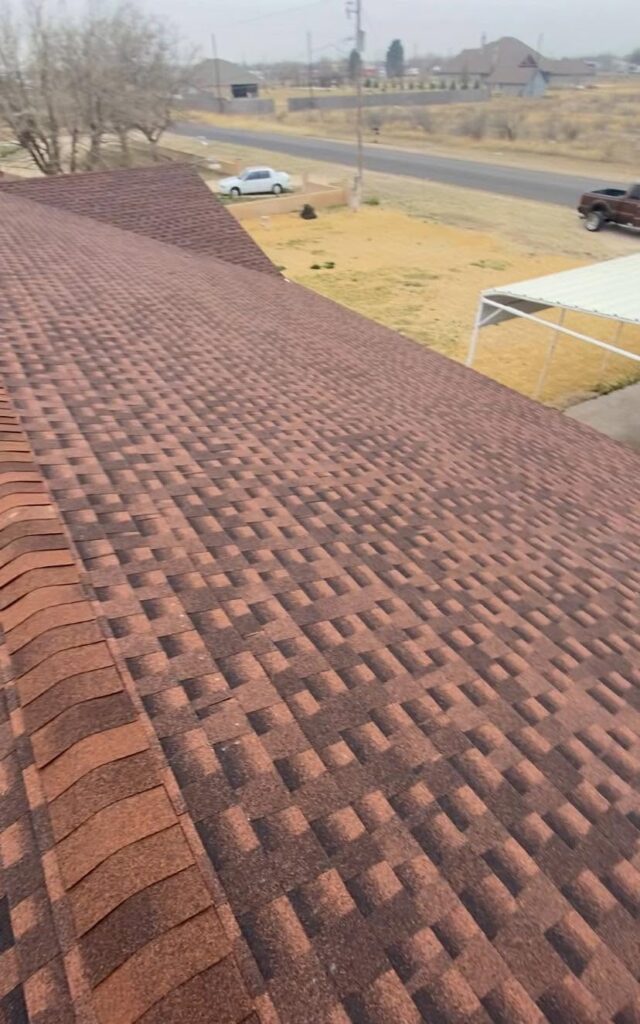
The nails holding shingles down face their own version of this problem, and the result is a defect roofers call a nail pop. As the plywood or oriented strand board decking swells and shrinks with heat and seasonal humidity changes, it slowly pushes fasteners upward out of the wood. A nail that backs out even an eighth of an inch will tent the shingle above it, creating a raised bump that breaks the water seal and catches wind. Over enough cycles the nail head can wear a hole straight through the shingle from underneath, giving water a direct path to the decking. Curled and cupped shingle edges follow a similar pattern, since the exposed portion of the shingle heats and cools faster than the covered portion beneath the course above. That temperature difference across a single shingle causes uneven expansion, and uneven expansion is what lifts corners and edges away from the roof plane. Once an edge lifts, wind gets underneath it, and the shingle tab that used to lie flat becomes a sail waiting for the next spring storm.
How Temperature Swings Cause Roof Damage at Flashing, Metal, and Sealant
Metal moves considerably more than asphalt or wood when temperatures change, and that difference is where a large share of West Texas roof leaks begin. A twenty foot run of aluminum drip edge will grow and shrink close to a third of an inch across a hundred degree swing, while a comparable length of galvanized steel moves about half that distance. The wood it is fastened to barely moves at all in response to heat, so every cycle forces the metal to slide against the fasteners pinning it in place. Over years, those fasteners elongate their own holes, the metal begins to ripple or buckle at the laps, and the tight fit that kept water out gradually opens up. Valley metal, step flashing along walls, counterflashing at chimneys, and headwall flashing above dormers all experience the same relentless push and pull. The pieces that fail first are almost always the ones installed with too few fasteners, no expansion allowance, or a heavy bead of caulk substituting for proper detail work. A flashing joint that relies on sealant alone is a joint that will leak in this climate, because no sealant survives that many cycles unaided.
Metal roofing panels face an even larger version of this challenge, since a forty foot standing seam panel can move roughly a third of an inch from a cold morning to a hot afternoon. Quality standing seam systems account for that movement with concealed clips and slotted fastener holes that let the panel float along the deck. Exposed fastener panels, which are common on shops, barns, and metal buildings throughout the Odessa and Midland area, do not have that luxury. Every screw through the face of the panel fights the movement directly, and eventually the screw either backs out or wallows out its hole. The neoprene washer under each screw head compresses, hardens, and cracks under years of ultraviolet exposure and thermal load, and once that washer fails the hole above your decking is wide open. Oil canning, meaning the visible waviness across broad flat panel areas, often traces back to panels that were installed with no room to expand. A metal roof can absolutely deliver decades of service in West Texas, but only when the installation respects how far the metal intends to travel.
Sealants and rubber components are the shortest lived parts of nearly every roofing system, and thermal cycling is the primary reason. Standard caulk stretches and compresses reasonably well when it is fresh, yet ultraviolet exposure combined with daily expansion and contraction dries it out, shrinks it, and eventually cracks it apart. Pipe boots deserve particular attention, since the flexible collar sealing around plumbing vents is usually made of EPDM or neoprene that sits fully exposed to the sun. In this climate, those collars commonly split within eight to twelve years, and sometimes sooner on a south facing slope with no shade at all. A cracked pipe boot is one of the most frequent leak sources roofers find, and the water it lets in often runs down the vent pipe and stains a ceiling far from the actual entry point. Skylight curbs, satellite mount penetrations, swamp cooler platforms, and HVAC curbs all carry the same vulnerability. Replacing a failing boot is a small job, while repairing the decking and drywall it ruined is not. Need a leak traced back to its real source? Click here for our roof repair service.
Temperature Swing Roof Damage Below the Surface in Decking and Fasteners
The plywood or oriented strand board decking under your shingles is the structural foundation of the entire roofing system, and it responds to both heat and moisture changes. Building codes and manufacturer instructions call for a small gap between decking panels precisely because those panels need somewhere to go when they expand. Roofs built without that gap develop ridging along the panel seams, which appears from the ground as long straight lines running across the roof plane. Those ridges concentrate stress on the shingles bridging them, and shingles bridging a ridge crack sooner than shingles lying flat. Attic humidity in West Texas stays low most of the year, but a single wet stretch followed by a hot dry week creates a swelling and shrinking cycle in the wood itself. Panel edges that swell and then shrink repeatedly lose their crisp edges and begin to soften, especially in oriented strand board. Once a panel edge softens, the fasteners driven near it lose grip, and the whole assembly above becomes less secure.
Fastener withdrawal is a quiet failure that most homeowners never see until shingles start blowing off. Every nail in a roof depends on friction between the nail shank and the surrounding wood fibers to stay put. Thermal and moisture cycling in the decking works against that friction constantly, slowly loosening the grip nail by nail across the whole roof. Roofs assembled with smooth shank nails suffer worse than roofs assembled with ring shank fasteners, since the rings bite into the wood and resist backing out. Nails that were overdriven, underdriven, or driven at an angle during the original installation give up even faster, because they never achieved full holding power to begin with. Once a meaningful percentage of fasteners have loosened, the roof’s wind uplift resistance drops well below what the shingle manufacturer originally rated. That is how a roof that shrugged off sixty mile per hour gusts for a decade suddenly loses shingles in a storm no worse than the ones before it.
Attic ventilation plays a direct role in how severe all of this becomes, and it is the single most overlooked factor on Permian Basin homes. An unventilated or poorly ventilated attic in Odessa can climb past 150 degrees on a summer afternoon, essentially cooking the shingles from underneath while the sun bakes them from above. Heat trapped against the underside of the decking widens the daily temperature range that every component experiences, which multiplies the wear from every cycle. Proper ventilation requires balanced intake and exhaust, generally one square foot of net free vent area for every 150 square feet of attic floor, or one per 300 square feet when the system is balanced correctly and a vapor retarder is present. Intake at the soffits and exhaust at or near the ridge lets hot air escape continuously instead of pooling under the roof deck. Homes with blocked soffit vents, insulation stuffed into the eaves, or exhaust vents without matching intake never achieve that airflow. Correcting ventilation during a roof replacement costs very little compared to the years of shingle life it protects.
Signs of Temperature Swing Roof Damage West Texas Homeowners Should Look For
The good news about heat related roof damage is that it develops gradually and leaves visible clues along the way. Most of those clues can be spotted from the ground with a decent pair of eyes, and the rest turn up during a quick trip into the attic with a flashlight. Catching a lifted shingle or a cracked pipe boot early usually means a small repair instead of a full replacement. Waiting until a ceiling stain appears means the water has already been traveling through your insulation and framing for some time. Homeowners in Odessa, Midland, Andrews, and the surrounding communities should build a habit of checking their roof twice a year, ideally in early spring before storm season and again in early fall after the worst of the summer heat. You do not need to climb up on the roof to do a useful inspection, and in most cases you should not. What matters is knowing which signs actually indicate a problem and which ones simply reflect normal age.
Ground Level Signs of Temperature Swing Roof Damage
Start by walking the full perimeter of your house and looking up at each roof slope from several angles, since low sunlight in the early morning or late evening reveals surface irregularities that midday sun washes out. Look for shingle tabs that appear lifted, curled at the corners, or slightly raised in the middle, since those raised spots often indicate a nail working its way out of the decking. Scan the roof plane for straight lines or ridges running in a consistent direction, which usually point to decking panel seams that have swelled and pushed upward. Watch for dark patches where the granule coating has worn thin, exposing the darker asphalt underneath, and for any shingle that appears a different shade than its neighbors. Check the ridge and hip lines closely, because ridge cap shingles bend over a sharp angle and consequently crack before field shingles do. Any shingle that looks like it has split lengthwise or has a visible crack running across it has almost certainly reached the brittle stage of aging. Take a few photos each time you look, since comparing images across a couple of years shows progression far better than memory does.
Gutters and the ground around your foundation hold additional evidence that most homeowners walk past every day. A steady accumulation of granules in the gutter trough, at the base of downspouts, or in the flowerbeds beneath the eaves shows that the protective surface layer is eroding. A small amount of granule shedding is normal on a new roof and tapers off within the first year, so ongoing heavy loss on an older roof is a genuine warning sign. Look at the drip edge along the eaves and rakes for buckling, waviness, separated laps, or sections that have pulled away from the fascia board. Metal that has clearly moved has been moving for a while, and it very likely stopped sealing correctly some time ago. Examine any exposed sealant you can see around vents, satellite mounts, or wall terminations for cracking, shrinking, or separation from the surfaces it was supposed to bond. Fascia boards showing paint failure or dark staining directly below a particular roof section frequently indicate water sneaking behind the drip edge at that spot.
Penetrations deserve their own dedicated look, because they cause a disproportionate share of leaks relative to the small area they occupy. Use binoculars or the zoom on your phone camera to inspect every plumbing vent boot on the roof, focusing on the rubber collar where it wraps the pipe. Cracks running around the collar, a collar that has pulled down away from the pipe, or rubber that looks chalky and gray instead of black all indicate a boot at the end of its service life. Check the flashing around chimneys, swamp coolers, and HVAC curbs for gaps, rust, or missing counterflashing where the metal should tuck into the masonry or siding. Look at the valleys where two roof planes meet, since valleys carry the highest water volume on any roof and any flashing failure there produces a fast leak. Note anything that looks out of place and write down the approximate location so a roofer can go straight to it. Small observations from the ground routinely save homeowners thousands of dollars in avoided interior damage.
Attic and Ceiling Signs of Temperature Swing Roof Damage
Your attic offers the clearest view of what is actually happening between the shingles and your living space, and a flashlight is the only tool required. Pick a bright sunny day and turn your flashlight off once your eyes adjust, then look for pinpoints of daylight coming through the roof deck. Daylight visible around a nail, at a panel seam, or near a penetration means there is an open path where water can follow. Run your light along the underside of the decking looking for dark staining, water tracks, or areas where the wood appears a different color than the surrounding sheathing. Stains that are dry and well defined often reflect an old leak that has already been fixed, while soft, dark, or damp wood indicates something active. Check the nails protruding through the decking for rust or mineral deposits, since condensation and leaks both leave residue on exposed metal. Pay extra attention to the areas directly beneath valleys, chimneys, and plumbing stacks, because those are the highest probability locations for water entry.
Insulation tells its own story, and it is worth examining carefully while you are up there. Compressed, matted, or discolored batts and darkened areas in blown insulation frequently mark spots where water has landed repeatedly over time. Insulation that has been wet loses much of its thermal resistance permanently, so those areas cost you money on cooling bills long after the leak itself has stopped. Look at the soffit areas near the eaves to confirm that insulation has not been pushed into the vent openings, which chokes off the intake airflow the attic needs. Feel the air temperature in different parts of the attic on a hot afternoon, since dramatically hotter zones typically signal poor circulation in that section. Confirm that bathroom and kitchen exhaust fans vent completely outside the building rather than dumping humid air into the attic space. Moisture added to an already hot attic accelerates decking deterioration and fastener corrosion considerably.
Inside your living space, ceilings and walls give you the last line of warning before a small problem becomes an expensive one. Brown or yellow rings on a ceiling, bubbling or flaking paint near an exterior wall, and a faint musty smell in a closet or corner room all warrant a closer look upstairs. Water rarely enters directly above the spot where it appears, since it typically travels along rafters, trusses, or the top of a wall plate before it finds a place to drop. Nail heads showing through the ceiling drywall, small cracks appearing at drywall seams, or a section of ceiling that feels soft to a light press deserve immediate attention. Do not paint over a ceiling stain and consider the matter closed, because a covered stain simply hides the evidence while the leak continues its work. If a stain grows or darkens after a rain, water is still getting in and the source is still open. Want a professional set of eyes on the problem before it spreads? Click here to schedule our roof repair service.
When to Schedule an Inspection for Temperature Swing Roof Damage
Timing your inspections around the West Texas calendar makes them significantly more productive than random checks. Late summer and early fall, right after the roof has endured months of extreme surface temperatures, is when heat related damage is easiest to identify. Sealant that survived the spring will have cracked by September, pipe boots that were merely aging in May will show open splits, and shingles that have gone brittle will be obvious. A fall inspection also gives you time to complete repairs before winter cold snaps arrive, and rapid temperature drops put their own kind of stress on already weakened materials. Scheduling a second look in early spring puts you ahead of hail season and gives any needed work a chance to be finished before storms arrive. Two inspections a year is a reasonable target for a roof past the five year mark in this climate.
Certain events should trigger an inspection regardless of where you are in the calendar year. Any hail event, any wind event with gusts above roughly fifty miles per hour, and any storm that leaves debris in your yard justify a professional look at the roof. Damage from those events lands differently on a thermally aged roof than it does on a newer one, since brittle shingles fracture where flexible shingles would simply flex and recover. A new ceiling stain, a sudden spike in your electric bill, or a musty odor that was not there before all warrant an inspection as well. Buying or selling a home in Odessa, Midland, or one of the surrounding communities is another obvious moment to get a documented condition report. Insurance carriers increasingly ask for roof age and condition information, and having recent documentation strengthens your position. Waiting until water is actively dripping removes every good option you had.
Most homeowners underestimate how much a professional inspection reveals compared to a self performed check from the ground. An experienced roofer knows which small details predict future failures, understands how specific shingle brands age in this climate, and can differentiate between cosmetic wear and a genuine structural concern. Walking a roof safely requires the right footwear, fall protection, and experience reading which areas of decking can support weight, and none of that is worth risking on a Saturday afternoon. A trained inspector also checks components most homeowners never think about, including ventilation balance, fastener patterns, flashing details, and underlayment condition at the eaves. The report you receive gives you a realistic timeline for planning, which matters when a replacement represents a significant expense. Knowing that your roof has four good years left is far more useful than guessing. Thinking about a full replacement in the next few years? Click here to learn about our roof replacement service.
Why You Need a West Texas Roofer Who Understands Temperature Swing Roof Damage
Heat cycling damage requires a roofer who genuinely understands the Permian Basin, not one applying methods designed for a milder climate. Materials that perform beautifully in a moderate region can fail years early here, and installation details that seem optional elsewhere become mandatory under this kind of thermal load. The right contractor accounts for expansion at every flashing joint, specifies fasteners that hold in local conditions, and corrects ventilation problems instead of ignoring them. That contractor also tells you honestly when a repair will hold and when it is simply postponing an inevitable replacement. PB Roofing has built its reputation in West Texas on that kind of straight assessment, backed by workmanship designed for the conditions our roofs actually face. The difference between a roof that lasts and a roof that fails early usually comes down to decisions made on installation day.
What a Professional Inspection for Temperature Swing Roof Damage Covers
A thorough inspection begins on the ground with a full perimeter walk, documenting the condition of gutters, fascia, drip edge, and every visible roof plane from multiple angles. From there the inspector moves onto the roof surface, checking shingle flexibility by hand, examining granule coverage, and looking for blisters, splits, cupping, and raised fasteners across each slope. Every penetration receives individual attention, including plumbing boots, exhaust vents, swamp cooler and HVAC curbs, satellite mounts, and any abandoned holes from previous equipment. Valleys, ridges, hips, and wall intersections get inspected closely, since those transitions concentrate both water flow and thermal movement. The inspector notes any prior repairs and evaluates how well those repairs have held up under continued heat cycling.
The attic portion of the inspection matters just as much as the roof surface, and skipping it means missing half the picture. Inside the attic, the inspector checks decking condition from below, looks for daylight penetration and active or historical moisture staining, and verifies the fastener pattern securing the sheathing to the framing. Ventilation gets measured against the actual attic square footage to confirm the intake and exhaust are both adequate and balanced. Insulation coverage, depth, and condition are documented, since compressed or water stained insulation points directly to problem areas above. Framing members are checked for staining, rot, or fastener corrosion that would indicate a persistent moisture issue.
You receive a clear written report with photographs of everything found, organized so you can see exactly what the concern is and where it sits on your roof. Findings are separated into items requiring immediate attention, items to monitor over the coming year, and general observations about remaining service life. Recommendations include realistic cost ranges so you can plan rather than react. PB Roofing provides a free, no obligation estimate on every project, so an inspection carries no pressure to commit to anything. You are welcome to take that report, think it over, and decide on your own schedule.
Repair or Replacement Options for Temperature Swing Roof Damage
Not every instance of heat related damage calls for a new roof, and a good contractor tells you so plainly. Isolated nail pops, a handful of cracked shingles, one failed pipe boot, or a section of loose flashing are all straightforward repairs when the surrounding roof remains in sound condition. Repairs make solid financial sense on roofs in the first half of their expected service life, particularly when the damage is limited to a specific area or a specific component. The key question is condition of the field shingles overall, since a roof with brittle, granule depleted shingles across every slope will simply develop the next problem somewhere else. PB Roofing applies full credit from any roof repair toward a future replacement, so choosing to repair first never costs you anything down the road.
Replacement becomes the better choice when thermal aging has affected the entire roof rather than one portion of it. Widespread brittleness, extensive granule loss, multiple leak locations, decking that has softened, or a roof approaching the end of its rated life all point toward starting over. A replacement lets us address the underlying issues that shortened the previous roof’s life, including inadequate ventilation, improper fastener patterns, and flashing details that never accounted for expansion. It also gives you current generation materials with better heat resistance and stronger warranty coverage than what was available a decade or two ago. PB Roofing installs products from IKO and Owens Corning as a preferred contractor for both manufacturers.
Making that decision should never feel like a guessing game or a high pressure sales conversation. We walk you through what we found, explain the reasoning behind each option, and give you honest expectations about how long a repair should hold. Some homeowners choose to repair now and replace in two or three years, and that is a completely reasonable plan when the roof supports it. Others discover that replacing now costs less than a series of repairs stretched across the same period. Ready to get an accurate picture of your roof’s condition? Click here for our roof installation service.
Why Choose PB Roofing for Temperature Swing Roof Damage Repair
PB Roofing works in West Texas every day, and that experience shapes every recommendation we make. We know how Permian Basin heat treats asphalt shingles, how quickly ultraviolet exposure destroys pipe boots on a south facing slope, and how far a run of metal flashing will travel between a January night and a July afternoon. We install with those realities in mind, using expansion allowances, correct fastener selection, and ventilation corrections that extend the life of what we build. Our A+ rating with the Better Business Bureau reflects a track record of doing the work properly and standing behind it afterward. Every replacement we complete carries a four year labor warranty on top of the manufacturer coverage on materials.
We serve homeowners and businesses throughout the region, including Odessa, West Odessa, Midland, Andrews, Big Spring, Monahans, Kermit, Seminole, Pecos, Lamesa, and Fort Stockton. Our estimates are free and carry no obligation, and we will tell you when your roof has plenty of life left rather than pushing work you do not need. When repairs are the right call, we perform them correctly and apply the full cost as credit toward a future replacement. When replacement is the right call, we explain exactly why and show you the evidence supporting that conclusion. That approach has earned us long term relationships with families and property owners across the Basin.
Heat cycling damage never improves on its own, and every summer that passes adds another season of wear to components already working past their design expectations. A morning spent on an inspection today routinely prevents a ceiling repair, an insulation replacement, and a mold remediation bill later. Our team handles roof installation, roof repair, roof replacement, and commercial painting, so one call covers the full range of exterior work your property may need. Reach out to PB Roofing at (432) 853-7270 or email sean@roofingpb.com to schedule your free inspection and get a clear, documented answer about your roof’s condition. We will show you exactly what we find and let you decide what happens next.