
What Is Roof Decking and When Does It Need to Be Replaced
Roof decking is the layer of wood sheathing that sits between your rafters or trusses and everything you can see from the ground, and it carries the weight of the shingles, the underlayment, the fasteners, and the crew walking above it. Most homes across Odessa and the wider Permian Basin have decking made of plywood or oriented strand board, while older houses built before the 1970s often have wide wooden planks laid across the framing with gaps between them. Decking rarely gets attention because it stays hidden under the roof covering for decades at a time, and the only day it becomes visible is the day the old shingles come off. That single day matters more than most homeowners expect, because a roof system is only as strong as the surface holding the nails. Late summer in West Texas is when the damage from a long hail season and months of brutal heat finally shows itself in the attic and along the ceiling lines. Understanding what decking does, how it fails, and what triggers a replacement puts you in a confident position when a contractor walks your roof and hands you a report.
What Is Roof Decking and What Does It Do on a Permian Basin Home
Roof decking, also called sheathing, is the structural skin of the roof; it spans the gaps between rafters or truss chords and turns a skeleton of framing into a solid surface. Every other layer depends on it, since underlayment lies directly on the deck and shingles are nailed through both. Building codes require asphalt shingles to be installed over a solidly sheathed deck, which is why gapped plank roofs from the mid century era often need an overlay before new shingles go down. The deck also acts as a diaphragm that ties the framing together and helps the structure resist the straight line winds that roll across the Permian Basin during spring and summer storms. Good decking holds a nail tight for decades, while weak decking lets fasteners back out and creates the raised bumps homeowners notice across a shingle surface. Knowing what sits under your shingles gives you a real advantage when it comes time to compare bids.
Roof Decking Materials Used on Odessa Homes
Most homes built in Odessa, Midland, and the surrounding towns since the 1970s use either plywood or oriented strand board for roof decking, and both perform well when they stay dry and properly ventilated. Plywood is manufactured from thin veneers of wood glued in alternating grain directions, which gives it strength in both axes and a reputation for handling moisture cycles without permanent swelling. Oriented strand board is made from compressed wood strands bonded with resin, and it arrives on the job with a consistent thickness that produces a flat, uniform roof plane. OSB costs less per sheet and dominates new construction across Texas, though it swells at cut edges when water sits on it for an extended period. Both products carry a span rating stamped on the panel, and that number tells the installer the maximum framing spacing the panel was designed to bridge. A crew that respects those ratings will also leave a small gap between panels, because wood expands as temperature and humidity shift through the year. Neither material fails simply because of age; they fail because water reached them and stayed.
Older neighborhoods around Odessa still hold houses with plank decking, sometimes called board sheathing or skip sheathing, built from one by six or one by eight lumber nailed across the rafters. Wood shingles once required those gaps so air could move through the assembly, but asphalt shingles need continuous support beneath them. When a crew tears off an old roof and finds spaced planks with visible daylight between them, the correct fix is an overlay of new plywood or OSB across the entire surface. Skipping that step leaves shingles unsupported over every gap, which leads to cracking along the seams and fasteners that never seat correctly. Plank decking that runs tight, with boards butted against each other, can sometimes be reused if the wood is sound and each board is fastened at every rafter. Older lumber also splits easily around nails, so an experienced crew will test holding power before committing to the existing surface. That decision belongs in the written estimate, not in a surprise change order after the tear off begins.
West Texas conditions treat decking differently than humid regions do, and that difference shapes what we find during a tear off. Low humidity slows the decay that plagues coastal states, so a leak here can go months without producing the soft, blackened wood a Houston roofer sees in weeks. Extreme attic temperatures are the bigger local threat, since summer decks routinely climb past 150 degrees and bake the adhesives holding OSB strands and plywood veneers together. Evaporative coolers mounted on rooftops add a second regional problem, because the pans, water lines, and flashing around them leak slowly and soak the deck directly beneath the unit. Blowing sand and grit work into every seam and around every penetration, wearing down sealants that were supposed to last another decade. Add hail, high wind, and the sudden downpours that arrive with late summer thunderstorms, and the deck ends up carrying stress from several directions at once. Any one of these conditions can produce serious localized damage while the rest of the deck stays perfectly serviceable.

How Roof Decking Supports the Rest of the Roof System
Shingle performance depends on fastener holding power, and fastener holding power depends entirely on the deck. A roofing nail needs to penetrate the sheathing completely or embed at least three quarters of an inch into solid lumber, and the head must sit flush against the shingle without cutting into the mat. When the deck is soft or delaminated, the nail spins in place, the head sinks too deep, and the shingle loses the wind resistance the manufacturer tested it for. Manufacturers such as IKO and Owens Corning publish wind ratings that assume proper nailing into an approved deck; install over compromised sheathing and those ratings no longer apply. That distinction matters for warranty coverage, because a shingle failure traced back to a bad deck usually falls outside the product warranty. Solid decking is also what keeps a roof plane looking straight from the curb, since waves and dips telegraph through shingles and show up in every photograph of the house. The cheapest way to protect a shingle investment is to start with a surface worth nailing into.
Underlayment lays across the deck as a secondary water barrier, and it can only do that job when the surface underneath is flat and continuous. Synthetic underlayment tears where it bridges a gap or spans a hole left by rotted sheathing, which turns a backup layer into an open path for water. Drip edge fastens to the deck along eaves and rakes, so crumbling edge sheathing leaves that metal with nothing solid to hold. Valley metal, pipe boots, and step flashing all rely on fasteners driven into the deck, and each of those details sits exactly where water concentrates during a heavy rain. Ridge vents cut into the deck depend on clean, straight edges along the cut line in order to seal properly against wind driven rain. Replacing damaged sheathing before these components go on protects every layer installed above it. Skipping that step simply relocates a future leak.
Attic ventilation and decking health are directly connected, and homeowners often learn that only after a problem appears. Balanced intake at the soffits and exhaust at the ridge keeps hot, moist air moving out of the attic instead of condensing on the underside of the sheathing. In Odessa, the moisture load usually comes from bathroom fans venting into the attic, disconnected dryer ducts, or an air conditioning system sweating through the summer. Those sources look small individually; over several years they leave dark staining and soft spots along the underside of a deck that never saw a single roof leak. Proper ventilation also lowers peak attic temperatures, which extends shingle life and reduces the thermal stress on the panels themselves. A thorough roof evaluation looks up into the attic and not only down at the shingles. Anyone quoting a replacement without inspecting from below is guessing about the most important layer of the system.
Roof Decking Thickness and Code Requirements in Texas
Thickness is not a matter of preference; it follows the framing spacing and the load the panel has to carry. Roof framing in this region is commonly set at 24 inches on center, which calls for panels rated for that span. A 7/16 inch OSB panel with a 24/16 span rating is the standard on most tract homes, while 1/2 inch and 5/8 inch plywood show up on custom builds and on homes with heavier roof coverings. Panel clips installed between rafters at unsupported edges keep adjacent sheets aligned and stop the edges from deflecting under foot traffic. Thicker panels feel more solid underfoot and hold fasteners better, which is why some homeowners choose to upgrade during a full replacement. The International Residential Code sets the minimums, and local amendments in Ector County and the City of Odessa apply on top of those. A licensed contractor should be able to explain in plain terms which requirement applies to your specific roof.
Asphalt shingles require a solidly sheathed deck, and that language rules out installing them directly over spaced planks. Replacement sheathing must match or exceed the thickness of the surrounding deck so the roof plane stays flat and the shingle courses run straight across it. Sheets are installed with the long dimension perpendicular to the framing and with staggered end joints, which spreads load across multiple supports. Every panel edge needs to land on a rafter or truss, and every panel needs fastening at the required spacing along the edges and through the field. Nails driven into open air between framing members hold nothing at all, and that mistake shows up regularly on rushed jobs. Crews working in high wind areas tighten fastener spacing to improve uplift resistance across the whole assembly. These details cost very little to do correctly and cost a great deal to correct later.
Permits and inspections exist because the deck is a structural component and not a cosmetic one. A roof that once passed inspection with plank decking may still need an overlay today, since current code governs the new installation rather than the original build. Ordinance or law coverage on a homeowner policy sometimes pays for those required upgrades after a covered storm loss, though the limits vary widely by carrier. Documentation helps in either case, so photographs of the exposed deck belong in every project file. A contractor who shows you pictures of the bare deck before underlayment goes down has nothing to hide from you. Planning a full replacement and want the decking handled correctly from the first sheet? Click here for our roof replacement service.
When Does Roof Decking Need to Be Replaced
Roof decking gets replaced for one of three reasons: water damage, structural failure, or code requirements that apply to the new roof. Full deck replacement is uncommon on homes across the Permian Basin, and most projects call for partial replacement measured in individual sheets. A crew tears off the shingles and underlayment, walks the entire surface, and marks every soft, delaminated, or rotted section for removal. Damage clusters in predictable places, including around chimneys, along valleys, beneath evaporative coolers, at pipe penetrations, and at the eaves where wind driven rain backed up under the shingles. Honest contractors price this work by the sheet and show the homeowner the damage before cutting anything out. Recognizing the warning signs from inside your own house gives you a real head start on that conversation.
Signs Your Roof Decking Needs to Be Replaced
The clearest exterior sign of failing decking is a roof plane that no longer looks flat. Stand across the street in the late afternoon, when low sunlight rakes across the surface, and look for dips, waves, or sagging between the rafters. Sagging that follows a straight line usually points to a framing issue, while random soft spots point to localized water damage in the sheathing itself. Nail pops appearing across a whole section of roof suggest the deck no longer grips fasteners the way it should. Shingles that look wavy or that lift at the corners in one isolated area often sit directly over swollen OSB edges. Granule loss and cracked shingles are separate problems, though they open the path for the water that eventually reaches the wood. Any of these signals earns a professional look before the next round of storms arrives.
The attic tells a more direct story, and a flashlight is the only tool required. Dark staining on the underside of the sheathing marks where water has repeatedly wet the wood, and streaks running down the rafters trace the path it took getting there. Rusted nail tips show sustained condensation, since dry wood does not corrode fasteners. Daylight visible around a vent pipe or along a valley means the assembly above you is open somewhere. Compressed or stained insulation directly beneath a mark confirms that water arrived from the roof rather than from a plumbing line. Musty odors are less common in this climate than in humid regions, yet they still signal moisture sitting where it does not belong. Checking the attic right after a hard rain, while the evidence is still wet, produces the most useful information you can get.
Roofers judge decking by feel as much as by sight, and a deck that flexes underfoot has lost its structural integrity. That spongy sensation comes from delaminated plywood layers or from OSB strands that separated after prolonged moisture exposure. Homeowners should never climb a roof to test this personally, because a weak deck can give way without warning and the fall risk is real. Interior clues carry weight too, including ceiling stains, bubbling paint along a ceiling line, and drywall seams that crack in the same spot every year. Water travels along framing before it drops, so the stain on your ceiling rarely sits directly beneath the actual entry point. A repair scheduled early usually costs a fraction of what the same problem costs after a full season of neglect. Watching a stain spread across your ceiling right now? Click here for our roof repair service.
Storm Damage That Forces Roof Decking Replacement
Hail is the defining storm risk in the Permian Basin, and it arrives most often from spring through the end of summer. Hail damages shingles by bruising the mat and knocking granules loose, which shortens the life of the covering long before any leak shows up inside. Stones large enough to fracture decking outright are rare, though they do occur where the roof already has thin or deteriorated sheathing underneath. The greater risk is delayed, since a bruised shingle sheds water poorly and lets moisture reach the underlayment over the following months. Once water gets past the underlayment, the deck absorbs it and begins the slow process of losing strength. That is why a hail claim inspected in the fall often reveals decking problems that started with a storm two seasons earlier. Prompt inspection after a hail event protects the layer no one can see from the ground.
Wind causes the more dramatic decking failures, and West Texas produces plenty of it. Uplift pressure builds along eaves, rakes, and ridges, where airflow separates and pulls upward on the roof edge. When shingles peel back in a section, the underlayment usually goes with them, leaving bare deck exposed to the next rain that comes through. Panels fastened with too few nails can lift at the corners or detach entirely during a severe event. Debris driven by wind, including tree limbs and pieces of neighboring structures, punctures sheathing outright and leaves an open hole. Any roof stripped down to the wood needs a temporary cover immediately, because a single exposed night during a storm can soak an entire section. Emergency tarping buys the time needed to complete a proper repair rather than a rushed one.
Insurance carriers treat storm damaged decking differently than deteriorated decking, and that distinction drives what actually gets paid. Sheathing broken or punctured by a covered peril generally falls within the claim, while decking that rotted quietly over ten years usually does not. Many policies also include a limited allowance for decking replacement, and some include ordinance or law coverage for required code upgrades. Photographs taken during tear off carry far more weight with an adjuster than any written description ever will. A contractor experienced with local carriers knows which documentation matters and when a supplement request is appropriate. Homeowners keep much more control over the process when they understand these categories before the adjuster arrives. Clear records turn a disputed line item into a settled one.
What Happens When Roof Decking Is Replaced During a Tear Off
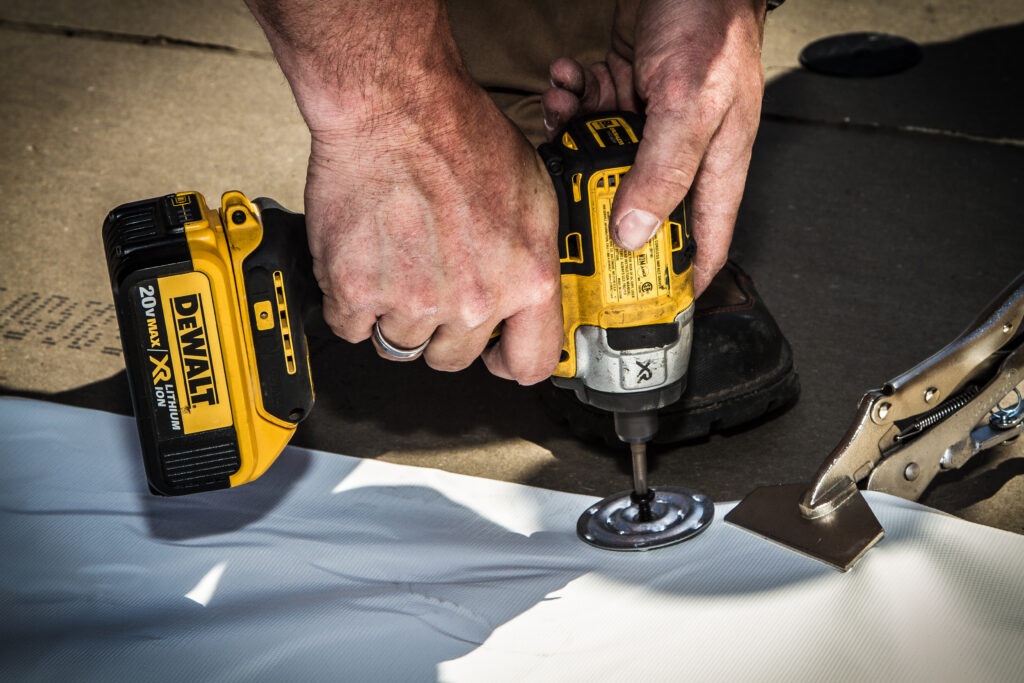
Deck replacement happens in the middle of a roofing project, after tear off and before underlayment goes down. The crew strips shingles, underlayment, and old fasteners, then sweeps the surface clean so every square foot is visible for inspection. Damaged sections are marked, cut back to the center of the nearest framing member, and removed as full or partial sheets. Cutting to the middle of a rafter gives the new panel a solid bearing surface and gives the neighboring panel one as well. New sheathing matches the existing thickness, sits with a small expansion gap at the edges, and gets nailed at the spacing the code requires. Panel clips go in wherever an unsupported edge spans framing set at 24 inches on center. The finished surface should feel uniform underfoot with no step or lip at the seams.
With the deck sound, the rest of the system goes on in a specific order that matters. Drip edge installs at the eaves first, then underlayment runs across the field, then drip edge goes on at the rakes over the top of that underlayment. Self adhered membrane belongs in valleys and around penetrations, where water concentrates and lingers longest. Starter course, field shingles, hip and ridge caps, and any ventilation components follow in sequence after that. Every one of those steps assumes a flat, dry, solidly fastened deck beneath it. Crews that rush past decking issues create callbacks that cost far more than the sheets ever would have. Sequence and workmanship are what separate a twenty year roof from a ten year one.
Timing matters for decking work more than for almost any other part of a roofing project. An exposed deck must be dried in the same day, which is why crews in this region watch the forecast closely through late summer storm season. Fall in West Texas brings mild temperatures and drier stretches, and those conditions let shingles seal properly while giving crews steady, predictable working days. Sheet counts are impossible to guarantee before tear off, so a trustworthy estimate includes a stated per sheet price rather than a vague allowance. Homeowners should ask to see photographs or to walk the property while the deck is still open. Transparency at that specific moment builds the trust that carries through the rest of the project.
Why You Need a Roof Decking Inspection Before Your Next Roof Replacement
A roof decking inspection is the step that prevents surprises, and it costs nothing to schedule with PB Roofing. An experienced inspector walks the roof, examines the attic, checks every penetration, and documents the findings with photographs you can keep. That report tells you what shape your decking is in before you sign anything, which puts you in a stronger position with contractors and with your insurance carrier. Late summer is the right time for it, since hail season has run its course and fall installation slots fill quickly across the Permian Basin. Waiting until a leak reaches the ceiling turns a small repair into a full replacement.
What a Professional Roof Decking Inspection Covers
A complete roof decking inspection starts on the roof surface, where the inspector looks for soft spots, deflection between rafters, nail pops, and shingle damage that points to moisture below. Every penetration gets attention, including pipe boots, vents, chimneys, skylights, and the base of any rooftop evaporative cooler. Valleys and eaves receive extra scrutiny because water concentrates there and stays the longest. The inspector notes flashing condition, sealant failure, and any area where the roof plane looks uneven from either the ground or the surface. Photographs from each area go into the report so you can see exactly what the inspector saw. Nothing in that process requires you to climb a ladder or make a decision on the spot.
The attic portion of a roof decking inspection reveals what the surface simply cannot. Staining, rusted fastener tips, daylight, compressed insulation, and mold growth all show up clearly from below. The inspector checks intake and exhaust ventilation, since poor airflow damages sheathing from the inside out over a period of years. Bathroom fans and dryer ducts terminating in the attic get flagged immediately, because those are frequent sources of hidden moisture in Odessa homes. Framing gets a look too, including cracked rafters and truss connections that have loosened over time. A written summary of both halves gives you a full picture instead of half of one.
The value of an inspection shows up in the decisions it makes possible for you. A deck in good shape means a straightforward replacement with predictable costs and no mid project adjustments. Localized damage means a targeted repair now and a planned replacement later on your schedule rather than the weather’s. Widespread deterioration means it is time to budget seriously and to review your insurance coverage in detail. Each of those paths is manageable once you know which one you are actually on. Building an addition or putting a roof on new construction? Click here for our roof installation service.
Roof Decking Costs, Insurance, and Estimates You Can Trust
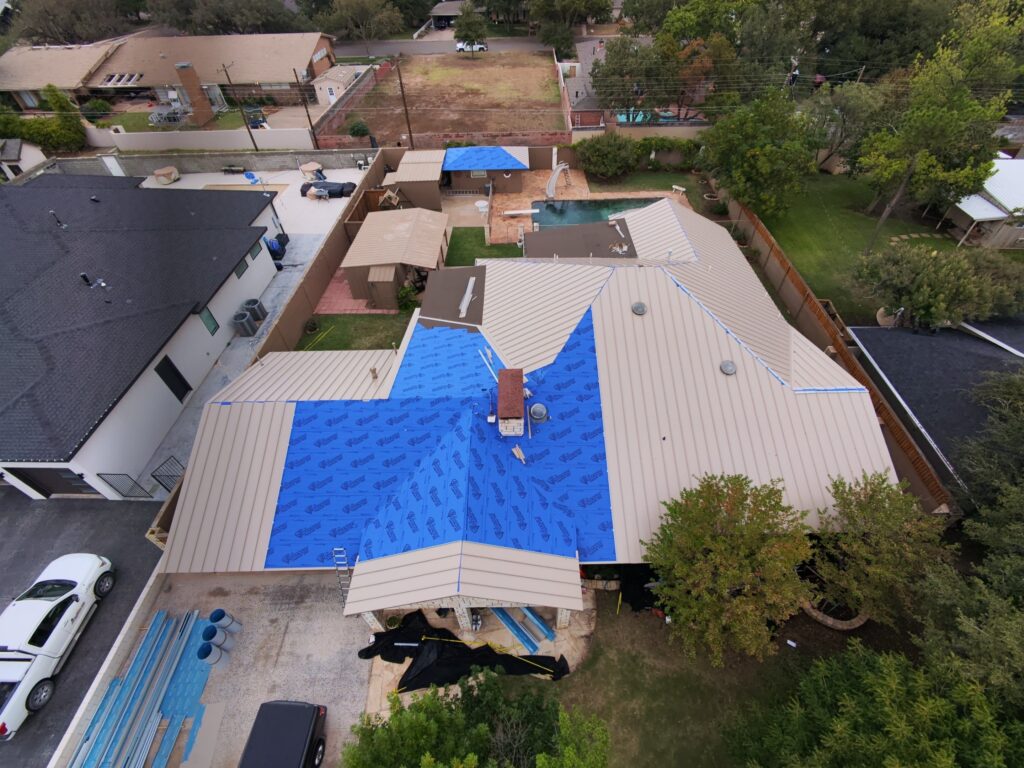
Decking replacement is priced by the sheet on nearly every reputable estimate, and the standard unit is a four by eight panel. That structure protects both sides, since neither the homeowner nor the contractor knows the exact count until the shingles come off. A fair proposal states the per sheet price up front and includes a small allowance so the final number never comes as a shock. Be cautious with bids that quote a suspiciously low total and then rely on decking charges to recover the margin. Asking one clear question about per sheet pricing during the estimate prevents most of the confusion that follows later.
Insurance handling deserves that same level of clarity from your contractor. Storm damaged sheathing is typically covered, deteriorated sheathing typically is not, and many policies carry a specific decking allowance with a stated limit attached. Ordinance or law coverage can pay for upgrades that current code requires even when the original assembly was perfectly legal when it was built. An adjuster works from evidence, so photographs of the open deck matter far more than a phone conversation about it. A contractor who documents thoroughly and communicates directly with your carrier removes most of the friction from the entire process.
The long view favors doing decking work correctly the first time it is opened up. New sheathing under a new roof restores fastener holding power, which is exactly what keeps shingles attached during a 70 mile per hour gust. It also preserves manufacturer warranty coverage, since those warranties assume an approved deck and proper nailing into solid wood. Homes with documented deck repairs appraise and sell more easily, because the paperwork answers a buyer’s questions before they are asked. Spending a few hundred dollars on sheets during a replacement is far cheaper than opening a finished roof two years later.
Why Choose PB Roofing for Roof Decking Replacement in Odessa
PB Roofing has built a reputation across Odessa, Midland, and the surrounding Permian Basin communities on straightforward inspections and clean workmanship. We hold an A+ rating with the Better Business Bureau, and we treat that rating as a standard to defend rather than a badge to display. Our team serves homeowners from Andrews to Fort Stockton, from Big Spring to Pecos, and every community in between. Every project starts with a free estimate that carries no obligation and no pressure of any kind. You get photographs of your deck, a clear explanation of what we found up there, and a price that holds.
We are a preferred contractor for both IKO and Owens Corning, two manufacturers that hold their installers to strict installation standards. That status means our crews install to specification, which is what protects the product warranties covering your shingles. Every replacement job we complete carries a four year labor warranty on top of the manufacturer coverage. We also apply full credit from any roof repair toward a future replacement, so money spent solving a problem today is never money wasted tomorrow. Those policies exist because we plan on being here for the next storm and the one after that.
Fall installation calendars across West Texas fill fast once the summer storms taper off, and the homes scheduled early get the best weather windows of the year. A free inspection now tells you exactly what condition your decking is in before you commit to anything at all. Our team will walk the roof, check the attic, photograph the findings, and explain your options in plain language you can act on. There is never a charge for the visit and never a push to sign a contract on the spot. Call PB Roofing at (432) 853-7270 or email sean@roofingpb.com to schedule your free roof decking inspection today.