
Roof Leaks in West Texas: How to Spot Them Before They Spread
A roof leak rarely announces itself. By the time you see a brown stain spreading across the ceiling or hear that slow drip during a rare West Texas downpour, water has often been working its way through your roof for far longer than you realize. In a climate defined by intense sun, sudden storms, and hard-hitting hail, even a small breach in your roofing system can open the door to serious damage inside your home.
The key to staying ahead of a leak is knowing what causes them, where they tend to start, and what the early warning signs look like. Homeowners across Odessa, Midland, and the wider Permian Basin face a unique mix of weather conditions that test a roof from every angle, and understanding how leaks develop is the best way to protect your home before a minor issue becomes a major one.
Why Roofs Leak in West Texas
The Permian Basin climate is tough on roofs in ways that quietly set the stage for leaks. Long stretches of intense sun dry out and weaken shingles over time, leaving them brittle and prone to cracking. Once that protective surface breaks down, water has an easier path into the layers underneath, and a roof that looks fine from the street may already be vulnerable.
Storms add a more sudden form of stress. Hail can bruise and crack shingles or knock loose the granules that shield them, while high winds lift edges and tear away pieces entirely. Even when the damage is too subtle to see from the ground, these openings give rain a way in during the next storm. Because West Texas weather can swing from bone dry to violent in a short span, damage from one storm often goes unnoticed until the following one reveals it as a leak.
Age and wear play a role too. Flashing around chimneys and vents can loosen, sealant can dry out and crack, and fasteners can work their way loose through years of heat expanding and contracting the materials. None of these things happen overnight, but together they create the small weak points where water eventually finds its way through. A roof is a system, and a leak is usually the result of one part of that system finally giving out.
Common Signs of a Roof Leak
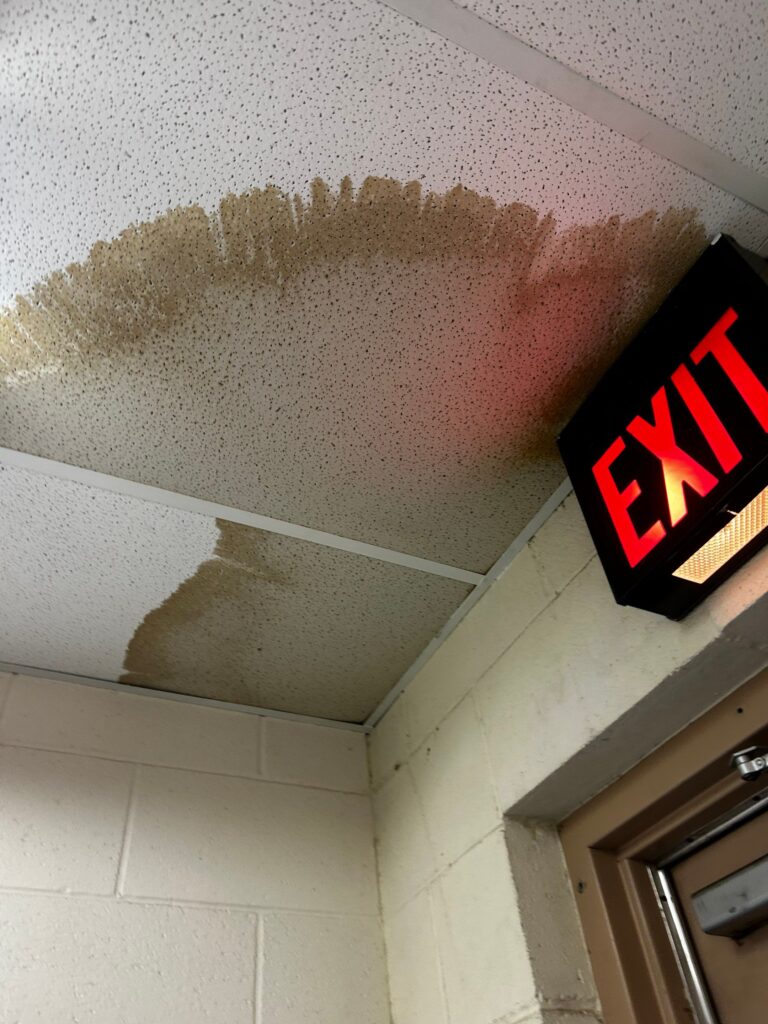
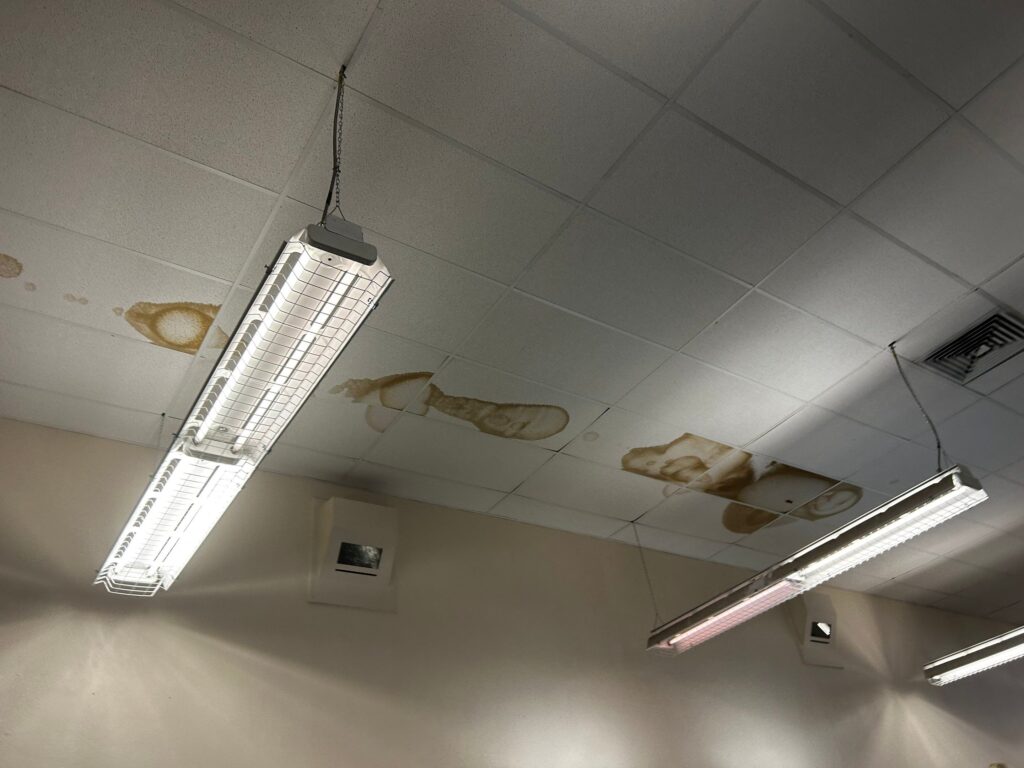
Some leaks are obvious, but many reveal themselves in subtle ways long before water ever drips onto your floor. Discolored patches on ceilings or walls are among the most common signs, often appearing as yellow, brown, or copper-colored rings that grow over time. These stains tend to show up in corners, along ceiling edges, or around light fixtures, and they are a clear signal that moisture is collecting somewhere above.
Need a roof repaired? Click here for our roof repair service.
Other clues are easy to miss if you are not looking for them. A musty or damp smell in an upstairs room or closet can point to moisture trapped in the structure. Peeling paint, bubbling drywall, or warped trim are all signs that water has been present. In the attic, you might notice damp insulation, dark streaks running down the rafters, or daylight peeking through where it should not be, all of which suggest the roof above has been compromised.
It is worth paying attention after every significant storm, since that is when hidden damage often turns into an active leak. If you notice any of these signs, the smartest move is to treat them seriously even if they seem small. A faint stain today can become a steady drip tomorrow, and catching the problem early gives you far more control over how the situation unfolds.
Where Leaks Tend to Start
Leaks rarely begin in the wide-open field of the roof. More often, they start at the spots where the roof has to bend, break, or be sealed around something. Flashing, the metal used to seal joints and transitions, is one of the most common culprits. Where the roof meets a chimney, a wall, or a skylight, the flashing takes the brunt of weather exposure, and once it loosens or corrodes, water slips right past it.
Roof penetrations are another frequent starting point. Anything that pokes through your roof, including plumbing vents, exhaust fans, and pipe boots, creates a seam that must be sealed tightly. Over years of West Texas heat, those rubber boots and sealants dry out and crack, leaving a gap right where water can enter. Valleys, the channels where two roof slopes meet, also concentrate runoff and become prime locations for leaks when their materials wear down.
Gutters and drainage matter more than many homeowners expect. When gutters clog with debris, water backs up and pools at the roof’s edge instead of draining away, which can force moisture under the shingles and into the fascia or decking. Identifying exactly where a leak originates can be surprisingly tricky, because water often travels along the roof structure before it shows up inside, appearing far from the actual point of entry.
Why You Should Not Ignore a Roof Leak
It can be tempting to set a bucket under a drip and deal with it later, but a roof leak almost never stays contained. Water that gets into your home looks for the path of least resistance, spreading through insulation, decking, and framing as it goes. What starts as a small damp spot can quietly compromise a much larger area before you ever see the full extent of it.
Want to know the best roofs for heat, wind, and sun? Click here for more information.
Moisture is also the perfect breeding ground for mold and mildew. Once water settles into the dark, enclosed spaces of an attic or wall cavity, mold can take hold and spread, creating problems that go beyond the roof itself and can affect the air inside your home. Prolonged exposure can rot wooden decking and framing, weaken the structure, and ruin insulation that is meant to keep your home comfortable through brutal West Texas summers and cold snaps.
There is also the matter of how much harder a problem becomes to address the longer it waits. A leak caught early is usually a localized issue, but one left alone can affect multiple layers of your home at once. Acting quickly keeps the damage contained and protects the parts of your home you cannot easily see, which is exactly why a leak should never be treated as something that can wait until later.
What to Do When You Spot a Leak
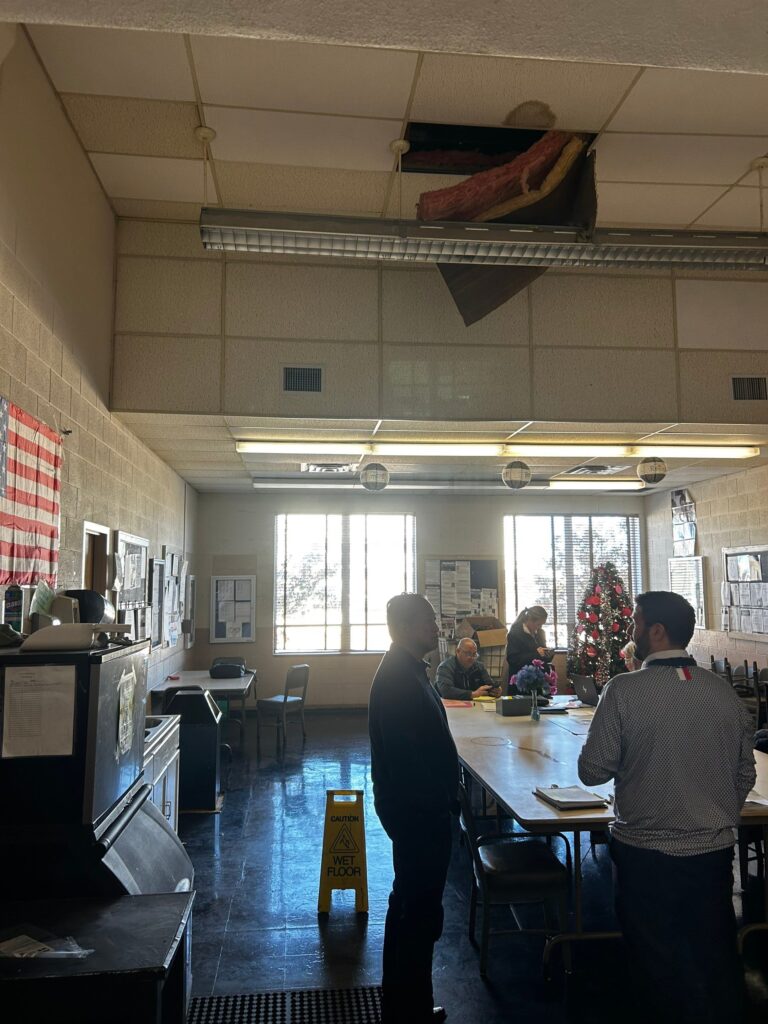
The moment you notice signs of a leak, focus first on protecting what is inside your home. Move furniture, electronics, and valuables away from the affected area, and place a container to catch any dripping water. If water is pooling on the ceiling, carefully relieving the pressure can prevent a larger collapse, but safety comes first, so never put yourself at risk trying to reach a soaked or sagging area.
Resist the urge to climb up and investigate the roof yourself. West Texas roofs can be steep, hot, and slick, and walking on a roof that may already be damaged is dangerous and can make the problem worse. Instead, document what you are seeing with photos of the stains, drips, and any visible damage. This record is helpful both for understanding the situation and for any conversations with your insurance provider down the road.
The most reliable next step is to bring in a professional who knows West Texas roofs and can trace the leak to its true source. A trained roofer can pinpoint where water is entering, assess how far the damage has spread, and recommend the right repair before the problem grows. PB Roofing serves homeowners throughout Odessa, Midland, and the surrounding Permian Basin communities, and the team is ready to inspect, diagnose, and stop a leak before it does lasting harm.
A roof leak is one of those problems that only gets worse with time, and the homeowners who fare best are the ones who act at the first sign of trouble. By learning to recognize the early warning signs, understanding where leaks tend to begin, and responding quickly when you spot one, you give yourself the best possible chance of protecting your home from serious water damage.
If you suspect a leak or have weathered a recent storm and want peace of mind, do not wait for the next downpour to find out where you stand. The experienced team at PB Roofing knows exactly how West Texas weather works on a roof and how to track down a leak at its source. Call PB Roofing today at (432) 853-7270 to schedule your inspection and keep a small problem from turning into a big one.