
Why Does My Roof Make Popping Noises When It Gets Cold
A roof that pops, cracks, or bangs after the sun goes down is one of the more unsettling sounds a homeowner in the Permian Basin can hear. The noise usually shows up on the first cool nights of the season, when daytime highs still climb into the nineties and the temperature falls thirty or forty degrees after dark. Most of the time that sound is the natural result of building materials shrinking as they lose heat, and it does not mean your roof is failing. Some of the time it points to loose fasteners, weak attic ventilation, or framing that was never given room to move the way it needs to. Knowing the difference protects your ceiling drywall, your roof deck, and your budget. PB Roofing has tracked these sounds down in attics across Odessa, Midland, and the surrounding towns, and the causes repeat themselves more often than most homeowners expect. Understanding what moves, why it moves, and how loudly it moves takes the mystery out of a cold night.
What Causes Roof Popping Noises When It Gets Cold?
Every material on a roof responds to temperature, and each one responds at a different speed and a different rate. Asphalt shingles absorb heat all afternoon and hold it well past sunset, the plywood or OSB deck underneath cools faster, and the rafters or trusses below that cool slower still. When those layers change size at different rates, they slide against each other and against thousands of nails. Friction builds until something releases, and that release is the pop you hear through the ceiling. Metal components move even more dramatically, because metal conducts heat quickly and expands more per degree than wood does. In West Texas, where a clear night sky can pull a roof surface below the surrounding air temperature through radiant cooling, all of that movement happens fast enough to be audible in every room of the house.
Thermal Movement Behind Roof Popping Noises in Cold Weather
Thermal movement is simply the expansion and contraction that happens as a material gains or loses heat, and it is the single most common source of roof popping noises when it gets cold. Steel expands and contracts at roughly 0.0000065 inches per inch for every degree Fahrenheit, which sounds like nothing until you apply it to a full length panel. A twenty foot steel roof panel moving through a swing of one hundred degrees will change length by about an eighth of an inch, and aluminum panels move nearly twice that far. Wood behaves differently, changing very little along its length but a good deal across its width as it takes on or gives up moisture. Because these materials are all fastened to one another, they cannot move independently without resistance. That resistance builds as stored tension, and the tension eventually breaks free in a single audible snap rather than a slow, silent slide. A house that sat under full sun until six in the evening and then dropped into the forties by midnight is going to release that tension repeatedly for several hours.
The sound travels much farther than most homeowners realize, which is part of why a small movement in the attic can sound like something structural gave way over the bedroom. Framing lumber acts like a sounding board, carrying vibration down through the wall studs and into the interior finishes. A quarter inch of shift where a rafter meets the ridge board can register in the living room as a loud crack, and homeowners frequently report the noise coming from a spot nowhere near the actual source. Roofs with long, uninterrupted planes tend to be louder than roofs broken up by dormers, valleys, and hips, since longer runs accumulate more total movement before something slips. Homes built on a slab in this region, where the attic is often the only unconditioned space, concentrate the temperature swing into that one area. The larger the temperature difference between your attic and your living space, the louder and more frequent the popping becomes. None of this alone means damage has occurred, but it does tell you the roof assembly is working hard.
Metal roofs deserve their own mention because they are the noisiest offenders during a fast temperature drop, and the noise is often expected behavior rather than a defect. Standing seam systems are designed to float on concealed clips precisely so the panels can slide as they shrink, and that sliding produces a distinct tick or ping. Exposed fastener panels are screwed down tight through the face, so instead of sliding they flex, and the flexing releases in sharper, louder cracks. Older panels with elongated screw holes have already been moving for years, and the sound often grows louder as the openings wear. Flashing, drip edge, and metal valley pans expand and contract the same way, and a loose piece of drip edge can slap against the fascia in a cold breeze. Vent pipes, ductwork, and metal strapping in the attic add their own contribution to the chorus. If your popping noises started the same season a metal roof went on, thermal movement is almost certainly the explanation.
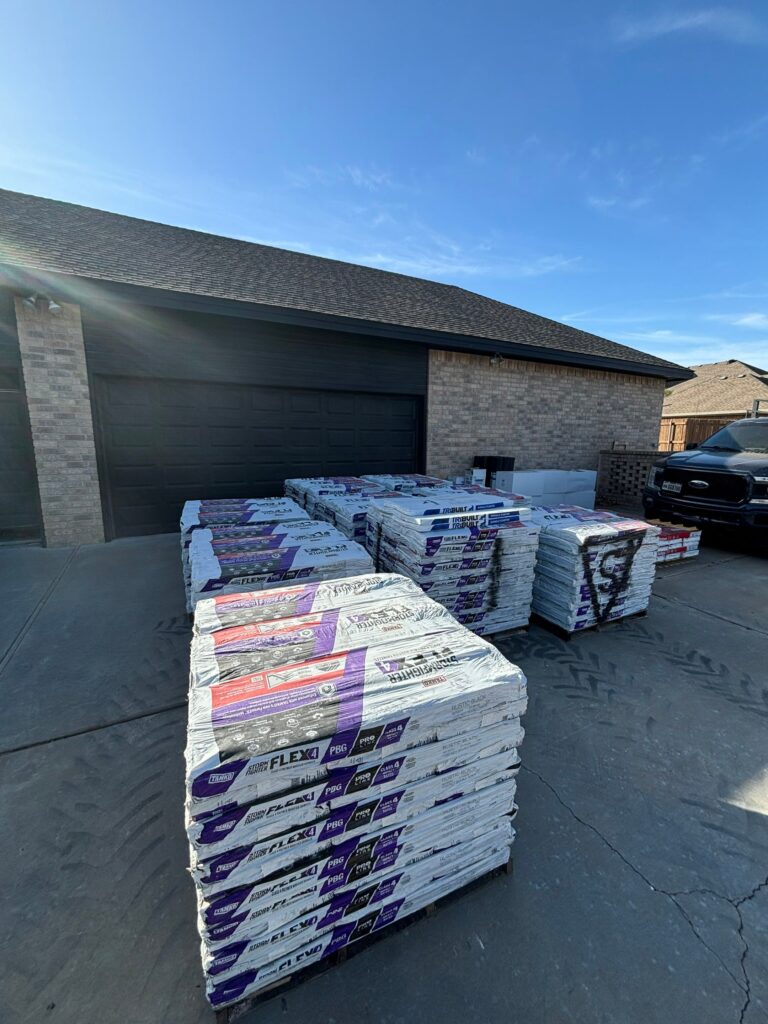
Truss Uplift and Framing Movement That Cause Roof Popping Noises
Truss uplift is a seasonal phenomenon that produces some of the loudest roof popping noises when it gets cold, and it confuses homeowners because it comes with visible cracks inside the house. Most modern homes use engineered trusses rather than stick framed rafters, and a truss has a bottom chord that spans the ceiling and top chords that carry the roof deck. In cold weather the top chords sit in a chilly, dry attic while the bottom chord stays buried in insulation, warmer and holding more moisture. That difference in temperature and moisture content makes the bottom chord slightly longer than the top chords want to allow, so the center of the truss arches upward. As the bottom chord lifts, it pulls the ceiling drywall away from interior partition walls with a sharp crack. The gap can open a quarter inch or more at the joint between ceiling and wall, and it closes again when the weather warms. The movement is real, the noise is real, and in most cases the structure is in no danger at all.
The proper fix for truss uplift addresses the finish work rather than the framing, because the framing is doing exactly what engineered lumber does. Drywall should not be fastened to the bottom chord within about sixteen inches of an interior partition wall, which lets the truss flex without dragging the ceiling with it. Truss clips allow the bottom chord to move vertically while still bracing the wall laterally, and they are inexpensive when installed during construction. Crown molding fastened only to the ceiling, and left free at the wall, hides the seasonal gap and slides quietly as it opens and closes. Adding attic insulation and sealing air leaks reduces the moisture and temperature difference that drives the arching in the first place. Homeowners who instead nail the ceiling down harder usually make the cracking worse, since the truss simply finds another place to release. A roofing contractor who understands attic assemblies can tell you quickly if uplift is what you are hearing.
Stick framed and older homes produce their own framing noises, and the pattern differs from truss uplift in useful ways. Rafters bear on a top plate and against a ridge, and every one of those bearing points is a place where wood can shift against wood as it dries and shrinks. Collar ties, purlins, and knee walls installed during past remodels often lack the fastening schedule the original framing had, so they work loose over the years and then announce themselves on cold nights. Homes that have had a second layer of shingles added carry extra dead load, which changes how the framing settles and how much it flexes. Additions built onto an original structure move at a different rate than the original roof, and the seam between the two is a frequent source of loud reports. Wood also gives up moisture steadily for years after construction, so a house under five years old is often noisier than a house of forty. Persistent noise from one specific spot, rather than scattered across the roof, is worth having someone look at.
Fasteners and Decking That Create Roof Popping Noises When It Gets Cold
The roof deck is a field of separate panels held down by thousands of individual nails, and both the panels and the nails contribute to roof popping noises when it gets cold. Plywood and OSB sheathing swell slightly in humid weather and shrink again when the air dries out, which is exactly what a cold front delivers in West Texas. Building code and every panel manufacturer call for roughly an eighth of an inch of space between panel edges so the sheathing has somewhere to go. Decks installed tight, with panels butted hard against one another, have no relief, so the panels press against each other, buckle upward, and release with a bang. H clips set between rafters help support panel edges and maintain that spacing at the same time. Once buckling starts, the ridge it creates telegraphs through the shingles above and becomes visible from the driveway in low sunlight. That visible ridge line is one of the clearest signals that a noise problem is also a workmanship problem.
Nails work loose through a process called nail popping, and it is driven by the same shrinking and swelling cycle. A smooth shank nail driven into damp lumber holds well until that lumber dries and shrinks around it, at which point the nail no longer grips and begins backing out a fraction at a time. Each small release can be audible, and the nail head eventually lifts the shingle above it or punctures it from beneath. Ring shank nails resist this far better, since the rings bite into the wood fiber and hold as the lumber moves. Nails that missed the rafter entirely, known in the trade as shiners, do nothing structurally and often collect frost on cold mornings, which is a quick way to spot them from inside the attic. Staples, which were common on older installations, hold poorly against this cycle and back out even faster than smooth nails. Any fastener that lifts creates a path for water long before it creates a hole you can see.
Metal roof fasteners follow a similar path with higher stakes, because each screw penetrates the panel and relies on a neoprene washer for its seal. Panels that expand and contract across a long run drag against the screw shanks, and over enough cycles the holes elongate into ovals. Once that happens, the screw cannot compress the washer evenly, and the popping you hear is the panel breaking free from a fastener that is no longer holding it. Washers themselves harden and crack after years of ultraviolet exposure and temperature cycling, which removes the seal even when the screw stays tight. Backed out screws stand slightly proud of the panel surface and are visible from the ground with binoculars on many roofs. Replacing them with larger diameter screws and fresh washers is a straightforward repair when it is caught early. Left alone, water follows every one of those openings straight to the deck below. Hearing new noises along with visible fastener movement is a good reason to schedule roof repair with our team before the next front arrives.
When Roof Popping Noises in Cold Weather Signal Real Damage
Not every pop is harmless, and there is a reasonably clear line between a roof that is simply moving and a roof that is coming apart. Normal thermal noise is scattered across the structure, happens during rapid temperature change, and stops once the temperature stabilizes. Problem noise repeats from the same location, continues in steady weather, or arrives alongside something you can see. Ceiling stains, cracked drywall that never closes back up, shingle granules in the gutters, and daylight visible through the attic all move the situation from curiosity to concern. Attic ventilation plays a large role here, since an attic that overheats by day and chills fast by night puts every fastener and panel through a harder cycle than necessary. A roof that has taken hail or high wind in the past year also deserves a closer look, since damaged shingles and loosened fasteners get noisier as the weather turns. The goal is to catch small movement before it becomes a leak that shows up on your ceiling.
Warning Signs That Roof Popping Noises Mean Real Roof Damage
The most reliable warning sign is a noise with a fixed address, meaning the same sharp crack from the same spot night after night. Scattered popping across a whole roof plane points to broad thermal movement, but a repeated sound in one location usually means one specific connection is failing. Walk the interior in daylight and look at the ceiling directly under that spot for hairline cracks, small round bulges where a nail head is pushing through, or discoloration that was not there last season. Check the corners of rooms and the joint where the ceiling meets an interior wall, since that is where truss movement shows first. In the attic, look for rafters or trusses that have separated from the ridge, gaps at metal connector plates, or nails standing out of the framing. Water staining on the underside of the deck, even old and dry staining, tells you moisture has already found a path. Photograph anything you find so you have a record of how it changes.
Outside the house, the roof surface itself carries evidence that pairs with the noise. Shingles that have lifted at the tab, buckled into a wave, or cupped at the corners have lost their bond and are moving freely in wind and temperature swings. Straight ridges running across the roof in line with the framing usually indicate buckled decking underneath. Nail heads showing through the shingle surface, exposed fasteners on metal panels standing above the plane, and separated seams are all visible from the ground with a decent set of binoculars. Granules collecting in the gutters and at the base of downspouts show that the shingle surface is wearing through, which accelerates every other issue. Flashing at chimneys, walls, and pipe boots that has pulled away from its sealant leaves an open joint that grows with each cycle. Damage in these areas rarely reverses on its own and almost always widens as temperatures continue to swing.
Certain sounds warrant faster attention than others, and it helps to know which ones. A single loud bang that shakes the ceiling, followed by a new crack in the drywall, is different from a series of light ticks spread over an hour. Scraping or grinding sounds suggest something is sliding rather than releasing, which often means a fastener has lost its grip entirely. A rhythmic slapping or fluttering in the wind points to loose flashing, drip edge, or a lifted shingle course rather than thermal movement. Dripping or trickling sounds after a rain or a melt event mean water is already inside the assembly. Noises that started immediately after a hailstorm or a high wind event are almost always related to that event rather than to the season. Storm damage has a way of staying quiet until the first hard temperature swing exposes it.
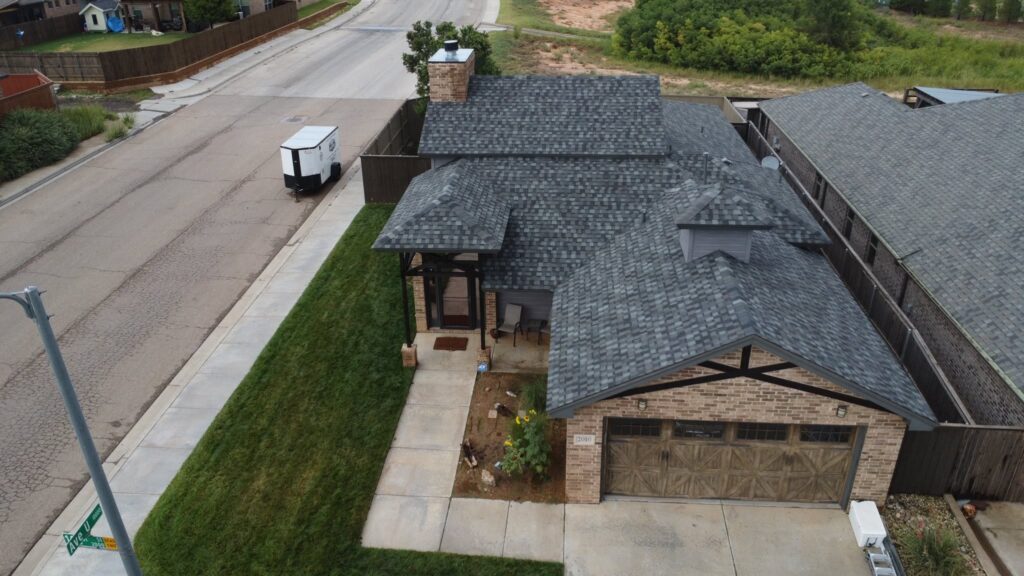
How Poor Attic Ventilation Turns Roof Popping Noises Into Real Damage
Attic ventilation exists to keep the space under your roof deck close to outdoor temperature and to move moisture out before it condenses, and a poorly ventilated attic amplifies every problem discussed so far. Code generally requires one square foot of net free ventilation area for every one hundred fifty square feet of attic floor, and that ratio can be relaxed to one in three hundred when intake and exhaust are properly balanced. Balance matters more than raw quantity, since exhaust vents without matching intake at the soffits simply pull conditioned air out of the house through ceiling gaps. An attic without adequate intake can run forty or fifty degrees above outdoor temperature on a summer afternoon and then drop hard overnight. That exaggerated swing puts far more strain on decking, fasteners, and framing than the outdoor weather alone would. More strain means more movement, more noise, and faster wear at every connection point.
Moisture is the second half of the ventilation problem and does the quieter, more expensive damage. Warm household air carries water vapor, and it rises into the attic through recessed lights, bath fan penetrations, attic hatches, and plumbing chases. When that vapor reaches a cold roof deck, it condenses, and the sheathing absorbs it. Wet sheathing swells, loses fastener grip, and eventually delaminates in the case of plywood or crumbles at the edges in the case of OSB. A deck in that condition will not hold nails properly, so shingles loosen, noises increase, and repairs stop lasting. Bath and kitchen exhaust fans that terminate in the attic instead of through the roof or wall are one of the most common causes we find. Correcting the venting path is often the cheapest meaningful improvement a homeowner can make.
Insulation and air sealing work alongside ventilation, and getting them out of order causes its own set of issues. Insulation belongs on the attic floor in a vented attic, and it needs to stop short of blocking the soffit vents, which is what baffles are for. Insulation stuffed into the eaves cuts off intake air, which strands heat and moisture at the peak of the roof no matter how many exhaust vents are installed. Mixing exhaust types, such as running a ridge vent alongside powered fans or box vents, can short circuit the airflow so that the roof pulls air in through one exhaust and out through another instead of drawing from the soffits. Sealing the ceiling plane at every penetration keeps household moisture where it belongs and reduces the load on the ventilation system. A balanced attic runs closer to outdoor temperature, cycles more gently, and is noticeably quieter on a cold night. If your attic feels stuffy, smells damp, or shows frost on the nail points in winter, ventilation is the place to start.
What a Roof Inspection Finds When Roof Popping Noises Mean Real Damage
A proper inspection for roof popping noises covers the exterior, the attic, and the interior, because the sound and the source are frequently in different places. On the roof, a technician checks fastener condition, shingle bond, seam integrity on metal systems, flashing at every penetration, and the flatness of each plane. Soft or spongy areas underfoot indicate deteriorated decking, and visible ridges point to panels that have buckled from a lack of spacing. Sealant at pipe boots, chimney counterflashing, and wall terminations gets examined for cracking and separation, since those materials age faster than the roof covering around them. Gutters and downspouts are checked for granule accumulation, which tells the story of surface wear over time. Ventilation components are counted and measured so intake and exhaust can be compared against the attic square footage. Photos from each area give you a record you can review yourself.
In the attic, the inspection focuses on the underside of the deck and the framing that supports it. Daylight through the sheathing, water staining, rusted nail points, mold growth, and separated panel edges each indicate a different failure. Framing connections at the ridge, at bearing walls, and at truss plates get checked for movement, gaps, and loose fasteners. Insulation depth and coverage are noted, along with any spot where insulation blocks a soffit vent or where a bath fan discharges into open attic space. Nails that missed framing are easy to spot and easy to correct once identified. Moisture readings on the sheathing tell us if condensation is an active problem rather than an old one. All of this together explains a noise that seemed random from inside the house.
The interior walkthrough ties the findings together and confirms which noises match which defects. Ceiling cracks are mapped against the framing layout above, which distinguishes seasonal truss movement from a fastener that has failed. Stains are checked for moisture with a meter, since a dry old stain and an actively wet one call for completely different responses. Homeowners are asked when the noise started, how often it repeats, and what the weather was doing at the time, and those answers narrow the possibilities quickly. Sounds that began after a specific storm get routed toward a storm damage evaluation and, in many cases, an insurance conversation. Sounds that show up every fall and disappear every spring usually point back to ventilation and framing rather than to roof covering failure. Once the cause is clear, the repair scope is straightforward to price and easy to explain.
Why You Need a Professional Roof Inspection for Roof Popping Noises
Chasing a roof noise from a ladder is a poor use of a Saturday and a good way to damage shingles that were doing fine. Roof surfaces are more fragile than they look, especially in cool weather when asphalt shingles stiffen and crack under foot traffic. A professional inspection identifies the cause in one visit, separates normal thermal movement from actual defects, and gives you a written scope instead of a guess. It also catches the issues you were not listening for, including worn pipe boots, failed sealant, and hail bruising that has not yet leaked. Getting ahead of that work before the coldest part of the season keeps a minor repair from becoming an interior ceiling replacement. PB Roofing provides a free, no obligation estimate on every project, so finding out costs nothing.
What to Expect From a Professional Roof Inspection for Roof Popping Noises
We start by asking about the noise itself, since the timing, frequency, and location narrow the field before anyone climbs a ladder. From there we inspect the roof surface, the attic, and the interior areas beneath the sound so the full path is documented. You receive photos of what we find, along with a plain explanation of what is normal movement and what is not. If the answer is that your roof is simply reacting to a thirty degree overnight swing, we tell you that and leave it alone. Nothing gets recommended that we would not do on our own home.
Scheduling is straightforward, and most inspections take about an hour depending on roof size and attic access. We work throughout Odessa, West Odessa, Midland, Andrews, Big Spring, Monahans, Kermit, Pecos, Seminole, Lamesa, and Fort Stockton, so travel rarely delays an appointment. You do not need to be home for the exterior portion, though attic access does require someone to let us in. Findings are delivered the same day in most cases so you can make a decision quickly. Homeowners in Midland can see our full Midland roofing services here.
If the inspection turns up storm related damage, we document it in the format insurance carriers expect. Hail bruising, wind lifted shingle courses, and displaced fasteners all have specific signatures that an untrained eye will miss. Having that documentation before you file gives you a much stronger position in the claim. We are happy to meet an adjuster on site and walk the roof together. Clear evidence shortens the process for everyone involved.
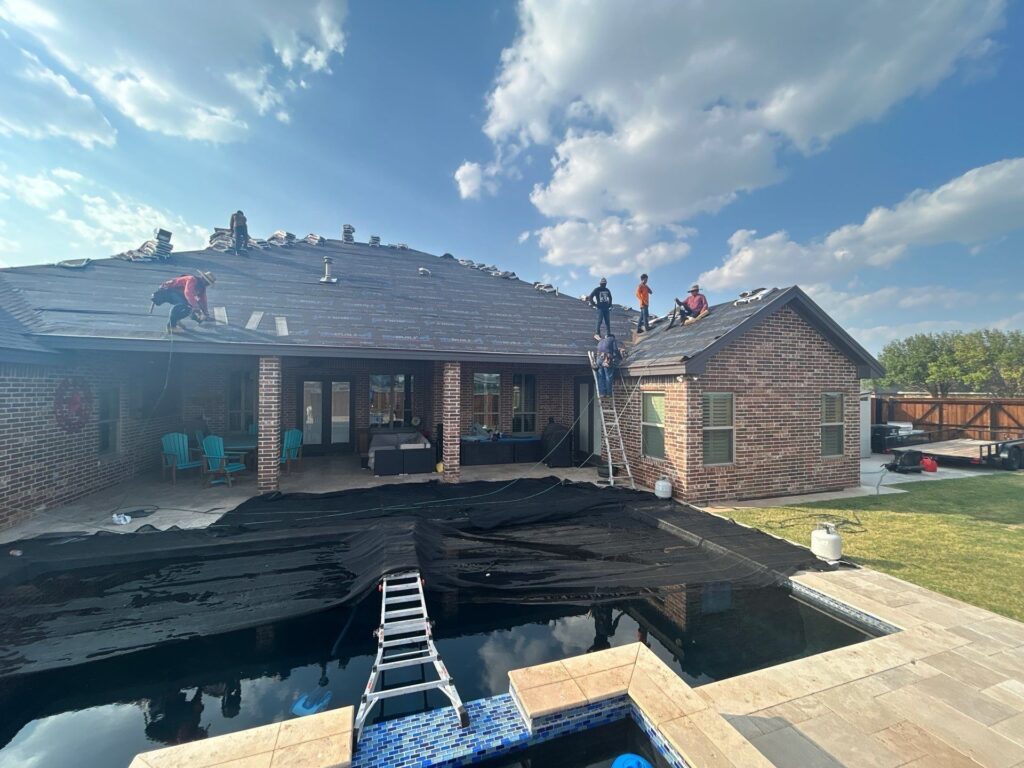
Repair or Replacement After a Roof Inspection for Roof Popping Noises
Many noise complaints resolve with targeted repair work, and we always price the repair option first when it is the honest answer. Replacing backed out fasteners, resecuring lifted shingles, correcting decking that was installed without proper spacing, and adding intake ventilation are all repairs rather than replacements. Flashing and pipe boot renewal often accompanies that work, since those components fail on their own schedule. A well executed repair can add years to a roof that still has life left in the covering. Our roof repair services cover all of these situations.
Replacement becomes the better value when the deck itself has deteriorated, when fasteners no longer hold anywhere on the roof, or when the covering is at the end of its service life. Widespread nail popping across multiple planes usually means the sheathing has lost its grip generally, and spot repairs will not hold. A full replacement lets us correct panel spacing, install ring shank fasteners, rebuild the ventilation to a balanced design, and start the warranty clock over. It also removes the guesswork about what is underneath. You can review our roof replacement process here to see exactly what the work involves.
We also apply the cost of qualifying roof repairs forward, giving you full credit toward a future replacement with us. That means money spent solving a noise problem this fall is not lost if the roof needs to be replaced in two years. It removes the pressure to replace early just to avoid paying twice. Homeowners get to make the decision on their own timeline and their own budget. That policy exists because we would rather earn the replacement later than push it now.
Why Choose PB Roofing for Your Roof Inspection and Roof Repair
PB Roofing holds an A+ rating with the Better Business Bureau, which reflects how we handle the work and how we handle problems when they come up. We are a preferred contractor for both IKO and Owens Corning, so the materials going on your home come with full manufacturer backing. Every replacement job carries a four year labor warranty on top of the manufacturer coverage. Free estimates come with no obligation and no pressure to sign anything on the spot. We would rather explain your options clearly and let you decide.
Our crews work in the Permian Basin year round and understand what this climate does to a roof, from the sun and heat of summer to hail season and the hard temperature swings that come with every front. That local experience matters, because a roof in Odessa faces a different set of stresses than a roof in a milder region. We install with the fastener schedules, ventilation ratios, and detailing that hold up here specifically. Shortcuts show up within a few seasons, and we are not interested in coming back to fix our own work. Doing it correctly the first time is simply cheaper for everyone.
Popping noises are worth investigating before the coldest weeks of the season arrive, since fasteners and decking only move further with each cycle. A quick inspection tells you if you are listening to normal thermal movement or to a roof that needs attention, and either answer is worth having. If you would like a set of experienced eyes on your roof and in your attic, reach out and we will get you scheduled. Call PB Roofing at (432) 853-7270 or email sean@roofingpb.com to set up your free, no obligation inspection. We are located at 13311 W County Rd 122 in Odessa and serve homeowners throughout the surrounding communities.