
How Long Does an Asphalt Shingle Roof Really Last in the Texas Heat
Asphalt shingles remain the most popular roofing material in West Texas, and homeowners across Odessa, Midland, and the surrounding Permian Basin rely on them every single day. Most manufacturers advertise lifespans of 20 to 30 years, yet those numbers come from laboratory conditions and mild climates. The Texas heat tells a very different story. Summer temperatures above 100 degrees, relentless UV exposure, sudden hailstorms, and constant wind all work together to shorten the life of an asphalt shingle roof. A roof in Odessa simply does not age the same way a roof in Ohio does. Understanding the real lifespan of your shingles helps you budget wisely and avoid emergency replacements. It also helps you spot problems early, when repairs are still affordable. The truth about asphalt shingle longevity in Texas starts with the climate itself.
The Average Lifespan of an Asphalt Shingle Roof in West Texas
A standard asphalt shingle roof in West Texas typically lasts 15 to 20 years, which is noticeably shorter than the national average. Premium architectural shingles can push past 20 years with proper installation and maintenance, but the extreme climate of the Permian Basin takes a measurable toll. Heat is the primary culprit, though UV radiation, hail, and wind all contribute to accelerated aging. Shingle quality matters as well; a builder grade three tab shingle will not perform like a heavyweight architectural product. Installation quality plays an equally large role, since poorly nailed or poorly ventilated roofs fail years ahead of schedule. Knowing what shortens shingle life gives you the power to slow the process down. Every year of extra life you gain from your roof is money that stays in your pocket.
How Texas Heat Shortens Asphalt Shingle Roof Lifespan
Asphalt shingles are made with a fiberglass mat coated in asphalt and topped with protective mineral granules. Heat attacks every one of those components over time. When surface temperatures on a West Texas roof climb past 150 degrees in July, the asphalt binder begins to dry out and lose its flexible oils. This process, called thermal degradation, makes shingles brittle and prone to cracking. Brittle shingles cannot flex with the roof deck, so they split, curl, and lose granules at a faster rate. Once granules wash into your gutters, the asphalt underneath sits exposed to direct sunlight. Exposed asphalt deteriorates rapidly, and the shingle loses its ability to shed water. That is how a 25 year shingle becomes a 17 year shingle in the Texas heat.
Thermal cycling makes the damage even worse than steady heat alone. West Texas is famous for hot days and surprisingly cool nights, especially in spring and fall. Your shingles expand during the day and contract after sundown, over and over, hundreds of times each year. This constant movement stresses the sealant strips that bond each shingle to the one below it. Weakened sealant strips allow wind to lift shingle edges, and lifted shingles invite water intrusion. Nails can also back out slightly as the roof deck expands and contracts. Each small movement seems harmless on its own, yet the cumulative effect shortens roof life significantly. Homes with dark shingles and poor attic ventilation experience the most severe thermal cycling damage.
UV radiation delivers the final blow to aging shingles in our region. The Permian Basin receives some of the most intense sunlight in the entire country, with very few cloudy days to offer relief. UV rays break down the chemical bonds in asphalt at the molecular level, a process that never stops as long as the sun is shining. Granules exist specifically to block UV rays, which is why granule loss accelerates everything else. South and west facing roof slopes take the heaviest UV exposure and almost always fail first. Many Odessa homeowners notice curling or cracking on the west side of the roof years before the east side shows wear. A professional inspection can catch this uneven aging early. Catching it early often means targeted repairs instead of full replacement.
Asphalt Shingle Roof Lifespan by Shingle Type
Three tab shingles are the most affordable option, and they carry the shortest lifespan in the Texas heat. These lightweight shingles use a single layer of material with less asphalt and fewer granules than premium products. Manufacturers often rate them for 20 to 25 years, but West Texas conditions routinely cut that to 12 to 15 years. Their light weight also makes them more vulnerable to our frequent high winds. A strong spring storm can strip three tab shingles right off the deck, exposing the underlayment beneath. Insurance adjusters in the Permian Basin see wind damaged three tab roofs constantly. If your home still has three tab shingles, plan for replacement sooner rather than later. The savings at installation rarely justify the shortened service life here.
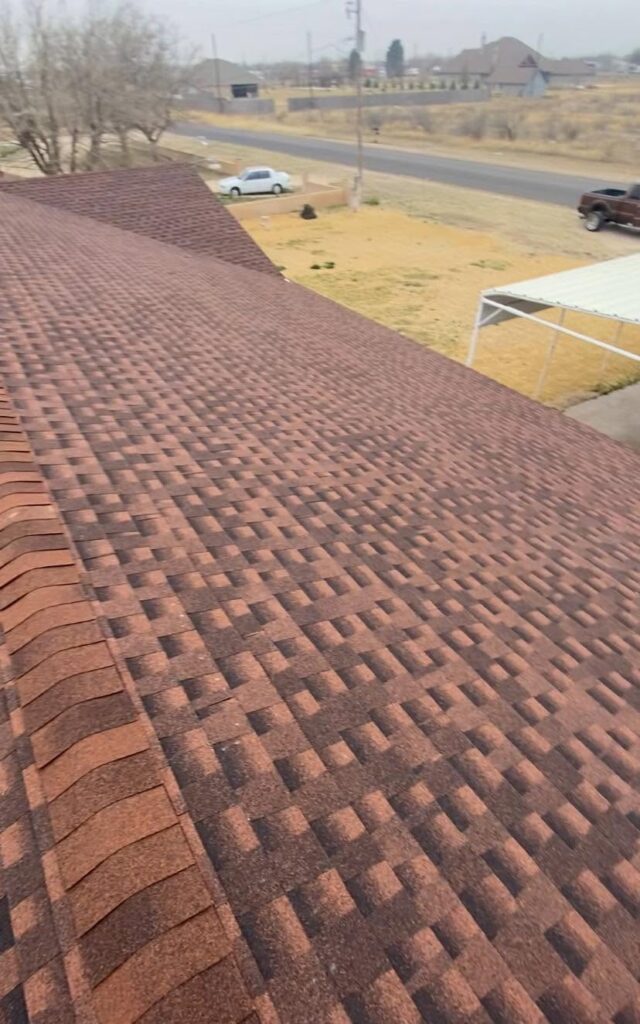
Architectural shingles, also called dimensional or laminate shingles, offer a major upgrade in longevity. These shingles use multiple bonded layers, which adds thickness, weight, and durability. Manufacturers rate them for 25 to 30 years, and in West Texas they realistically deliver 18 to 25 years with good maintenance. The extra asphalt content resists thermal degradation longer than thinner products. Their heavier weight also improves wind resistance, with many models rated for winds of 110 to 130 miles per hour. Brands like IKO and Owens Corning produce architectural shingles engineered specifically for hot, sunny climates. PB Roofing is a preferred contractor for both manufacturers, which means access to enhanced warranty options. For most Permian Basin homeowners, architectural shingles are the smart middle ground between cost and lifespan.
Impact resistant shingles represent the top tier for Texas roofs, and they earn their price in hail country. Class 4 impact resistant shingles are tested by dropping steel balls from height to simulate large hailstones. These shingles use rubberized asphalt polymers that flex on impact instead of cracking. That same flexibility helps them resist thermal cycling damage, which extends their lifespan in extreme heat. Many Texas insurance carriers offer premium discounts for homes with Class 4 shingles, sometimes 10 to 30 percent off the policy. Over a decade, those discounts can offset much of the upgrade cost. Considering how often hail rolls through Midland and Odessa, impact resistance is not a luxury here. Ready to upgrade your shingles? Click here for our roof replacement service.
Signs Your Asphalt Shingle Roof Is Reaching the End of Its Lifespan
Curling and cupping shingles are among the clearest signs of an aging asphalt roof. Curling happens when the edges of a shingle turn upward, while cupping occurs when the center lifts and the shingle takes on a wavy shape. Both conditions indicate that the asphalt has dried out and lost its flexibility. Curled shingles no longer lie flat against the roof deck, so wind slips underneath and pries them loose. Water also wicks under curled edges during rainstorms, reaching the underlayment and eventually the wood deck. Once curling spreads across multiple slopes, spot repairs stop making financial sense. Walk to the street and look at your roofline in the morning light. Visible waviness or lifted edges means the clock is running out.
Granule loss is the second major warning sign, and it is easy to check from the ground. Inspect your gutters and downspout splash blocks for accumulations of sandy black or gray granules. A small amount of shedding is normal for new roofs, but heavy loss on a roof older than ten years signals advanced wear. Look for shingles with dark, shiny patches where the asphalt is fully exposed. Those bald spots absorb even more heat, which accelerates deterioration in a vicious cycle. Bald shingles also lose their fire resistance rating along with their UV protection. Granule loss often concentrates on the slopes facing south and west. Heavy shedding after a hailstorm should trigger an immediate professional inspection.
Interior warning signs often appear after the roof surface has already failed. Water stains on ceilings, damp attic insulation, and daylight visible through roof boards all point to active leaks. Sagging areas in the roofline suggest the decking underneath has absorbed moisture and started to rot. Rising cooling bills can also indicate roof failure, since degraded shingles and wet insulation reduce your home’s thermal barrier. Mold or mildew odors in the attic deserve urgent attention in our climate. By the time interior symptoms show up, hidden damage has usually spread beyond the visible spot. Do not wait for a ceiling stain to think about your roof’s age. Seeing early signs of trouble? Click here for our roof repair service.
How to Extend the Life of an Asphalt Shingle Roof in Hot Climates
The Texas heat is unavoidable, but premature roof failure is not. Homeowners who take a proactive approach routinely add five or more years to their asphalt shingle roofs. The strategy comes down to three pillars: proper attic ventilation, regular professional inspections, and prompt repairs when damage appears. Each pillar attacks a different cause of early failure. Ventilation controls the heat that bakes shingles from below. Inspections catch small problems before they multiply. Fast repairs stop minor damage from spreading into structural issues. None of these steps costs much compared to a full replacement, and together they protect one of the largest investments in your home. A little attention each year pays off for decades.
Attic Ventilation Extends the Life of an Asphalt Shingle Roof
Your shingles take heat from two directions, and most homeowners only think about one. The sun bakes the roof surface from above, while a poorly ventilated attic bakes it from below. Attic temperatures in West Texas can exceed 150 degrees on a summer afternoon when ventilation is inadequate. That trapped heat radiates upward into the roof deck and cooks the shingles from underneath. Shingles attacked from both sides age at nearly double the normal rate. Manufacturers know this, which is why many shingle warranties are voided by improper attic ventilation. Balanced ventilation moves hot air out and pulls cooler air in continuously. Fixing airflow is one of the cheapest ways to extend roof life in a hot climate.
A balanced ventilation system pairs intake vents with exhaust vents to create constant airflow. Intake vents sit in the soffits along the eaves, drawing in outside air at the lowest point of the attic. Exhaust vents sit at or near the ridge, releasing superheated air at the highest point. Hot air naturally rises, so a properly designed system works around the clock without electricity. The general rule calls for one square foot of net vent area for every 150 square feet of attic floor, split evenly between intake and exhaust. Many older Permian Basin homes fall far short of that standard. Blocked soffit vents are especially common, often clogged by insulation or paint. A roofing professional can measure your ventilation and identify shortfalls quickly.
Proper ventilation delivers benefits far beyond shingle preservation. A cooler attic means your air conditioner fights less radiant heat, which lowers summer electric bills noticeably. Ventilation also removes moisture that migrates up from bathrooms, kitchens, and laundry rooms. Trapped moisture condenses on the underside of the roof deck, feeding mold and rotting the wood over time. In our dusty region, good airflow also helps keep attic conditions stable through wide temperature swings. Homeowners replacing a roof should always have ventilation evaluated at the same time. Installing new shingles over a broken ventilation system wastes money on both ends. PB Roofing evaluates attic airflow as part of every replacement project.
Regular Inspections Extend the Life of an Asphalt Shingle Roof
Annual professional inspections are the single best habit for maximizing roof lifespan. A trained roofer spots damage that homeowners miss from the ground, including cracked sealant, lifted nails, and early granule loss. Small issues like a single lifted shingle cost very little to fix. Left alone, that same lifted shingle lets wind and water attack the shingles around it. Damage on a roof never stays contained; it always spreads. Inspections create a documented history of your roof’s condition, which helps enormously with insurance claims after storms. Insurers respond better to claims backed by prior inspection records. One inspection per year is a small price for that protection.
Timing matters when scheduling roof inspections in West Texas. The ideal schedule includes one inspection in late spring after hail season peaks and another in fall before winter weather arrives. Any significant hailstorm or windstorm should also trigger an inspection, even if the roof looks fine from the driveway. Hail bruising is often invisible from the ground, hiding as soft spots where granules have been knocked loose and the mat beneath is fractured. Those bruises become leaks months later, long after the insurance claim window has tightened. Texas policies often carry deadlines for filing storm claims, so delayed discovery can cost you the entire claim. Summer is a smart time to catch damage from spring storms. Right now is exactly when hidden hail damage starts turning into visible leaks.
Between professional visits, homeowners can perform simple ground level checks. Walk the perimeter of your home monthly and scan the roof for missing, cracked, or curled shingles. Check gutters for granule buildup and look at flashing around chimneys and vents for gaps or rust. Use binoculars for a closer look without climbing; walking on a hot asphalt roof damages shingles and risks serious injury. Note anything unusual and photograph it with your phone for reference. Inside, glance at your attic and ceilings for stains or damp smells after heavy rain. Report concerns to a professional rather than attempting DIY roof repairs. Free estimates make professional evaluation an easy call, and PB Roofing provides one on every project.
Prompt Repairs Extend the Life of an Asphalt Shingle Roof
Speed is everything when it comes to roof repairs in a harsh climate. A missing shingle exposes the underlayment, and underlayment was never designed for weeks of direct Texas sun. UV rays degrade exposed underlayment rapidly, opening a direct path for water into the roof deck. One small leak can saturate insulation, rot decking, and stain ceilings within a few storms. Repair costs multiply at every stage of that progression. Fixing a few shingles might cost a couple hundred dollars, while replacing rotted decking and wet insulation can run into the thousands. The gap between those numbers is simply time. Homeowners who call at the first sign of trouble keep repairs small and roofs alive.
Certain repairs deliver outsized returns on roof longevity. Flashing repairs top the list, since flashing failures around chimneys, vents, and valleys cause the majority of roof leaks. Resealing or replacing damaged flashing costs little and prevents the most common failure points. Replacing individual wind damaged shingles keeps the protective surface intact and stops damage from spreading downwind. Sealing exposed nail heads prevents small rust driven leaks that are nearly impossible to trace later. Pipe boot replacement is another high value fix, because the rubber boots around plumbing vents crack quickly in Texas sun. Most of these repairs take a professional crew only a few hours. Each one buys your roof more years of reliable service.
Repairs make financial sense right up until they do not, and an honest contractor will tell you where that line sits. A good rule says repeated repairs across multiple slopes on a roof past 15 years signal that replacement is approaching. PB Roofing removes the risk from that decision with a unique policy: full credit for repair costs applied toward a future replacement. You never lose money by repairing first, even if replacement comes a year or two later. That policy lets homeowners buy time without throwing money away. It also removes the pressure to make a rushed replacement decision after storm damage. Ask about repair credits during your free estimate. Smart homeowners use repairs as a bridge, not a crutch.
Why You Need a Professional Roof Evaluation This Summer
Summer is when the Texas heat does its worst work, and it is also when spring hail damage starts turning into active leaks. A professional evaluation right now tells you exactly where your asphalt shingle roof stands in its lifespan. You will learn how many years of service remain, what repairs would extend that number, and what a future replacement will cost. That knowledge turns a stressful surprise into a planned decision. Guessing about roof age leads to either premature replacement or emergency failure, and both cost more than they should. A free evaluation removes the guesswork entirely.
A Professional Roof Evaluation Protects Your Home
Everything under your roof depends on the roof doing its job. Insulation, drywall, flooring, electronics, and family belongings all sit downstream of a single leak. A professional evaluation identifies weak points before water finds them. Trained roofers check flashing, sealant, shingle condition, and ventilation in a systematic way. They also inspect areas homeowners never see, like valleys and penetrations hidden from ground view. Early detection is the entire game in roof protection.
Storm damage detection is a critical part of any Permian Basin evaluation. Hail bruises and wind creases are subtle, and untrained eyes miss them constantly. A professional documents this damage with photos and measurements that support insurance claims. Texas insurers enforce filing deadlines, so undiscovered damage can become uncovered damage. An evaluation this summer captures everything spring storms left behind. That documentation alone can be worth thousands in claim value.
Evaluations also protect the people in your home, not just the structure. Hidden moisture breeds mold, and mold affects indoor air quality for everyone breathing it. Sagging decking can fail suddenly under the weight of a worker or a heavy hailstorm. Electrical wiring in attics does not mix well with slow leaks. A thorough evaluation flags these hazards before they escalate. Peace of mind is a real product, and an inspection delivers it.
A Professional Roof Evaluation Saves You Money
The math on evaluations is simple and lopsided. PB Roofing provides free, no obligation estimates, so the evaluation itself costs nothing. The problems it catches, however, cost less to fix early at every single stage. A resealed flashing joint today prevents a rotted deck section next spring. Catching granule loss early lets you plan a replacement on your schedule and your budget. Emergency replacements never come with good pricing or good timing.
Energy savings add another layer of return. An evaluation that identifies poor ventilation points you toward fixes that lower cooling costs all summer. Degraded shingles absorb more heat than healthy ones, pushing attic temperatures higher and forcing your air conditioner to run longer. Correcting these issues pays you back monthly on your electric bill. In a climate with four to five months of heavy air conditioning, those savings compound quickly. Your roof and your utility bill are more connected than most homeowners realize.
Insurance outcomes improve dramatically with professional documentation. Adjusters respond to detailed evidence, and a contractor’s evaluation report provides exactly that. Homeowners with documented roof conditions before a storm have a clear baseline for proving new damage after one. Claims move faster and settle higher with that paper trail. Some homeowners also qualify for premium discounts after upgrading to impact resistant shingles identified during an evaluation. Planning a new roof from scratch? Click here for our roof installation service.
Why Choose PB Roofing for Your Roof Evaluation
PB Roofing has built its reputation across the Permian Basin on straight answers and quality work. We hold an A+ rating with the Better Business Bureau, earned through years of honest dealings with local homeowners. We serve Odessa, Midland, Andrews, Big Spring, Monahans, Pecos, and communities throughout West Texas. Our team lives here, so we understand exactly what this climate does to a roof. Local knowledge shapes every recommendation we make. You get advice built for Texas heat, not generic national talking points.
Our manufacturer relationships translate directly into value for you. PB Roofing is a preferred contractor for both IKO and Owens Corning, two of the leading shingle brands in the country. Preferred status means our crews meet strict installation standards, and it unlocks enhanced warranty options for our customers. We back our own work with a 4 year labor warranty on all replacement jobs. Materials and workmanship both stand behind you long after the crew leaves. That double layer of protection is rare in this industry.
Our repair credit policy makes us the safest first call in West Texas roofing. Every dollar you spend on repairs with us applies as full credit toward a future replacement. You can extend your roof’s life today without wasting a penny on the road to replacement. Every project starts with a free, no obligation estimate, so there is zero risk in getting answers. Find out how many years your asphalt shingle roof really has left. Call PB Roofing at (432) 853-7270 or email seanjr@roofingpb.com to schedule your free evaluation today.