
Why Are My Shingles Losing Granules and Should I Worry
That gritty black sand collecting at the bottom of your downspout is not dirt, and it did not blow in from the caliche road. Those tiny stones are mineral granules, and they were factory embedded into the asphalt coating of your shingles for a reason. Granules block ultraviolet light, add fire resistance, give the roof its color, and take the beating that hail, sand, and falling limbs would otherwise deliver straight to the asphalt underneath. A shingle that has lost its granules is a shingle that has lost its sunscreen. Some granule loss is completely normal and expected; other patterns of loss are a warning that the roof is failing faster than the calendar suggests. In Odessa, Midland, and across the Permian Basin, we deal with a punishing combination of relentless summer sun, wind driven sand, and hail that arrives with almost no warning. All three of those pull granules off asphalt shingles at a rate homeowners in milder climates never see. Knowing the difference between harmless shedding and serious deterioration is what keeps a small repair from turning into an interior water stain and a full tear off.
What Causes Shingles to Lose Granules on a West Texas Roof
Granule loss is not one problem with one cause. It is a symptom, and the source can be anything from a brand new installation settling in to hail bruising that happened during a storm you barely remember. The asphalt in a shingle holds those granules the way fresh concrete holds aggregate, and anything that softens, cracks, ages, or strikes that asphalt will shake granules loose. Heat plays the largest role in our part of Texas because attic temperatures routinely climb far past what the outside thermometer reads. Wind adds a second layer of wear that homeowners in East Texas rarely think about, since our air carries fine sand that sandblasts the south and west facing slopes year after year. Poor attic ventilation quietly accelerates every one of these problems by baking the shingles from below. Understanding which cause applies to your roof determines the correct fix, and the correct fix is rarely the same for a two year old roof and an eighteen year old roof.
Normal Shingle Granule Loss After a New Roof Installation
Every bundle of asphalt shingles carries loose granules that were never fully pressed into the asphalt at the factory. During manufacturing, granules are poured onto the hot asphalt coating and rolled in, and the excess simply rides along in the bundle. When those bundles are carried up a ladder, cut, nailed, and walked on, more of that loose surface material breaks free. The first several rains after a new roof installation will carry a noticeable amount of grit into the gutters, and this is entirely normal shingle granule loss. Homeowners often panic the first time they clean out a downspout and find a coffee can worth of black sand. That material was never bonded to the shingle in the first place, so losing it costs the roof nothing in performance or lifespan. This shedding typically tapers off within the first few months and slows to almost nothing after the first year.
The way to tell normal shedding from a real problem is to look at the roof itself instead of the gutter. Fresh shingles that are simply releasing loose granules still show a uniform color across every slope, with no lighter patches, no shiny black spots, and no visible asphalt. If the color is even and the surface texture looks consistent from ridge to eave, the granules landing in your gutters came off the top layer and nothing structural is happening. A brand new roof should also still have crisp, straight lines along the bottom edge of each course with no curling or cupping. Photograph the slopes from the ground during the first month so you have a baseline for comparison later. Those photos become extremely useful if a hailstorm rolls through two years from now and you need to prove what the roof looked like before.
There is one exception worth watching during the first two years, and that is heavy, ongoing granule loss that never slows down. Premature granule loss on a young roof can point to a manufacturing defect, an installation problem, or shingles that were stored improperly before they ever reached your house. Manufacturers like IKO and Owens Corning stand behind their products, but material warranty claims require documentation, photographs, and often the shingle wrappers with the production lot numbers printed on them. Keep your paperwork somewhere you can actually find it, because a warranty is only as good as your ability to prove what was installed and when. A qualified contractor can inspect the surface, pull a sample shingle if needed, and file the claim on your behalf. Waiting years to report the problem almost always weakens the case. If your roof is young and still shedding heavily, get eyes on it now rather than next season.
Sun, Heat, and Age Related Shingle Granule Loss
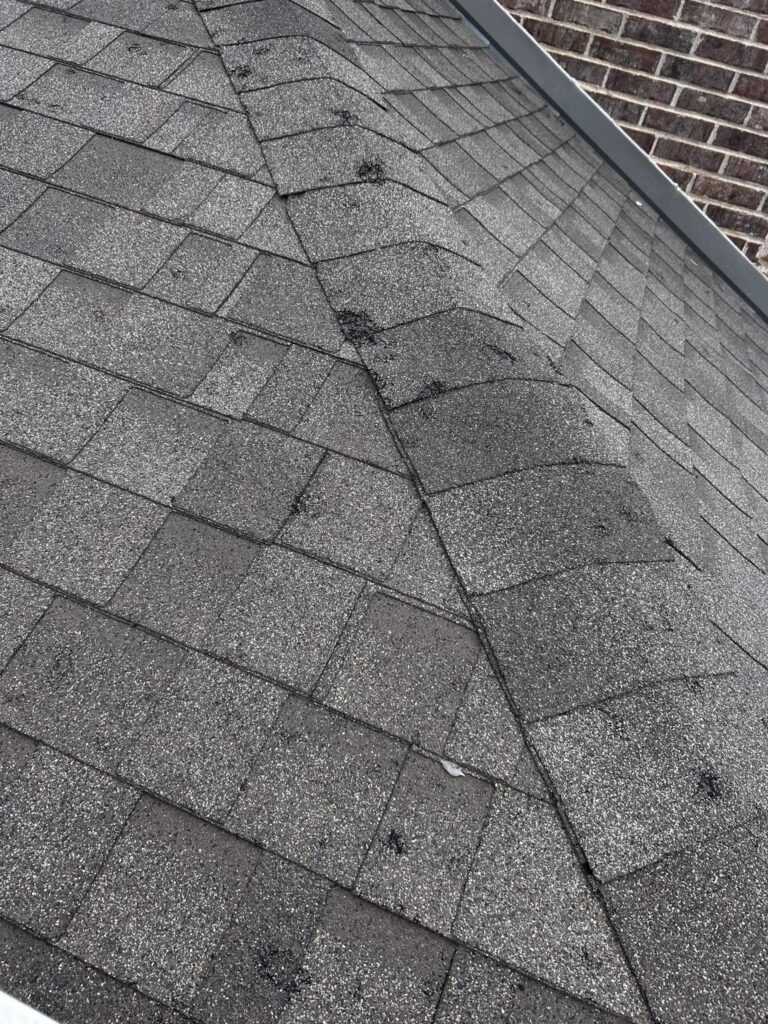
Asphalt is a petroleum product, and petroleum products dry out when they are cooked. Every summer day in Odessa, the surface of a dark roof can reach temperatures far above the ambient air, and that heat drives the volatile oils out of the asphalt coating. As those oils leave, the asphalt hardens, shrinks slightly, and loses its grip on the mineral granules pressed into it. Thermal cycling makes it worse: the roof expands under the afternoon sun, then contracts sharply after sunset, and that daily movement works granules free the same way freezing and thawing breaks up pavement. This kind of aging related shingle granule loss shows up gradually and fairly evenly, usually worst on the south and west slopes that take the most direct sun. Over fifteen to twenty years, a roof in our climate can look dramatically more worn on one side of the house than the other. That uneven appearance is not a defect; it is simply the sun doing what the sun does.
Wind driven sand compounds the problem in a way that is specific to the Permian Basin. Our spring and early summer winds carry fine grit at speeds that scour the exposed surfaces of a roof, and that abrasion strips granules off the raised portions of architectural shingles first. Combine that abrasion with asphalt that has already been dried out by heat, and granules that would have held for another decade in a gentler climate come loose early. This is one reason roofs here often reach the end of their useful life several years short of the number printed on the warranty. Homeowners frequently notice the shine first: a slope that has lost enough granules will reflect afternoon light with a slick, tarry appearance instead of a flat matte texture. That shine is exposed asphalt, and it means the ultraviolet protection is gone in that area. Once the asphalt is bare, degradation accelerates quickly.
Attic ventilation is the factor most homeowners never consider, and it is often the one most within their control. A poorly ventilated attic traps superheated air directly beneath the roof deck, which cooks the shingles from underneath while the sun cooks them from above. That doubles the thermal load and shortens shingle life measurably. Balanced ventilation means adequate intake at the soffits paired with adequate exhaust at or near the ridge, and both halves have to work for the system to function. Blocked soffit vents, buried insulation, and bathroom fans dumping humid air into the attic all break that balance. Fixing ventilation will not restore granules that are already gone, but it slows the loss on the remaining surface and protects the decking and framing from moisture damage. Any honest inspection should include a look inside the attic, not just a walk on the roof. Need a professional evaluation of your shingles and attic ventilation? Click here for our roof repair service.
Storm Damage and Hail Related Shingle Granule Loss
Hail creates a completely different signature than sun and age. When a hailstone strikes an asphalt shingle, it knocks granules away in a roughly circular pattern and bruises the mat underneath, leaving a spot that feels soft and slightly springy when you press on it. That dark circle of exposed asphalt is the visible half of the damage; the fractured fiberglass mat beneath it is the half that actually ends the shingle’s life. Hail bruises do not leak immediately, which is exactly why so many homeowners skip the inspection and pay for it three or four years later. The mat continues to crack and separate at the impact point, and eventually water finds its way through to the underlayment and decking. Hail damage on a roof is also usually accompanied by matching marks on soft metal surfaces such as gutters, downspouts, vents, and air conditioner fins. Those metal dents are often the easiest confirmation available from the ground.
Wind causes granule loss in a more indirect way. Strong gusts lift the bottom edges of shingles, break the factory sealant strips, and allow shingles to flap in every storm that follows. Each flap abrades the shingle against the one below it, grinding granules off the overlap area where you would never see them from the ground. Wind also drives debris across the roof surface, and in our region that debris includes gravel, tumbleweed, and branches. Creased shingles are another wind signature: a shingle that has been folded back and dropped again will show a horizontal line of missing granules right at the crease. That crease is a permanent weak point that will crack open with the next round of thermal cycling. Any roof that has been through a straight line wind event deserves a close look at the field, the ridges, and the rakes.
Timing matters enormously with storm related shingle granule loss because insurance policies contain deadlines. Most policies require that damage be reported within a reasonable period after the loss, and some carriers now write specific time limits directly into the policy language. Insurance covers sudden damage from hail and wind; it does not cover normal wear, aging, or granule loss caused by the sun. That distinction is why documentation matters so much, and why an inspection performed soon after a storm carries far more weight than one performed years later. A contractor who works in this area every day knows what our local storms leave behind and can tell the difference between a hail bruise and a blister. Get the inspection, get the photographs, and get a written report even if you decide not to file. Storm damage got past your shingles? Click here for our roof replacement service.
How to Tell If Shingle Granule Loss Is Serious
There is a practical test for granule loss, and it does not require you to climb anything. Serious loss leaves evidence in three places: the gutters, the roof surface, and the interior of the house. The volume of material in your gutters tells you how fast the roof is shedding, the appearance of the slopes tells you where the loss is concentrated, and the attic tells you if water has started getting through. A roof with even, moderate wear across all slopes is aging normally and may have years left. A roof with bare patches, shiny black areas, curling edges, and cracks running through the mat is finished, no matter what the warranty paperwork says. The goal of any honest assessment is to place your roof somewhere on that spectrum with evidence rather than guesswork. Once you know where it sits, the decision between repair and replacement usually makes itself.
Checking Gutters and Downspouts for Shingle Granule Loss
Gutters are the collection point for everything the roof sheds, which makes them the easiest place to measure shingle granule loss without a ladder on the roof itself. Pull the bottom elbow off a downspout or check the splash block after a hard rain and look at what came out. A light dusting of grit is normal on any roof past its first few years. A steady accumulation that fills the elbow, or a pile at the base of the downspout that rebuilds itself after every storm, means the shingles are releasing granules faster than a healthy roof should. Pay attention to which downspouts produce the most material, since that points you toward the slope with the worst deterioration. Note the color as well, because fresh granules match your shingle color while older material often looks grayer where the ceramic coating has worn.
Certain areas of a roof concentrate water flow and will always shed more than the rest. Valleys funnel runoff from two slopes into a single narrow path, and the water moving through them carries far more force than water sheeting down an open field. The area directly below a skylight, chimney, or dormer takes the same concentrated flow. If your granule loss is limited to the run below one of these features, the roof may be fine everywhere else and the fix may be as simple as addressing that one area. Loss spread across every downspout on the house tells a different story entirely. Walk the perimeter and check each one rather than judging the whole roof by the gutter nearest the driveway. A pattern that shows up on all sides points to age, heat, or a defect rather than a localized drainage issue.
Keep a simple record over time, because a single observation tells you very little. Clean the gutters, note the date, and check again after the next few significant rains. If the accumulation is heavier each time you look, the roof is accelerating toward failure and needs professional attention. If it stays roughly the same season after season, you are watching normal wear and can plan on a timeline rather than an emergency. This kind of tracking is also useful documentation for a warranty claim, since it establishes a pattern instead of a snapshot. Take photographs with something in frame for scale, such as a tape measure or a common household object. Homeowners who track granule loss for a year usually end up making a much better informed decision about replacement timing than those who react to one alarming gutter cleaning.
Inspecting the Roof Surface for Shingle Granule Loss and Bald Spots
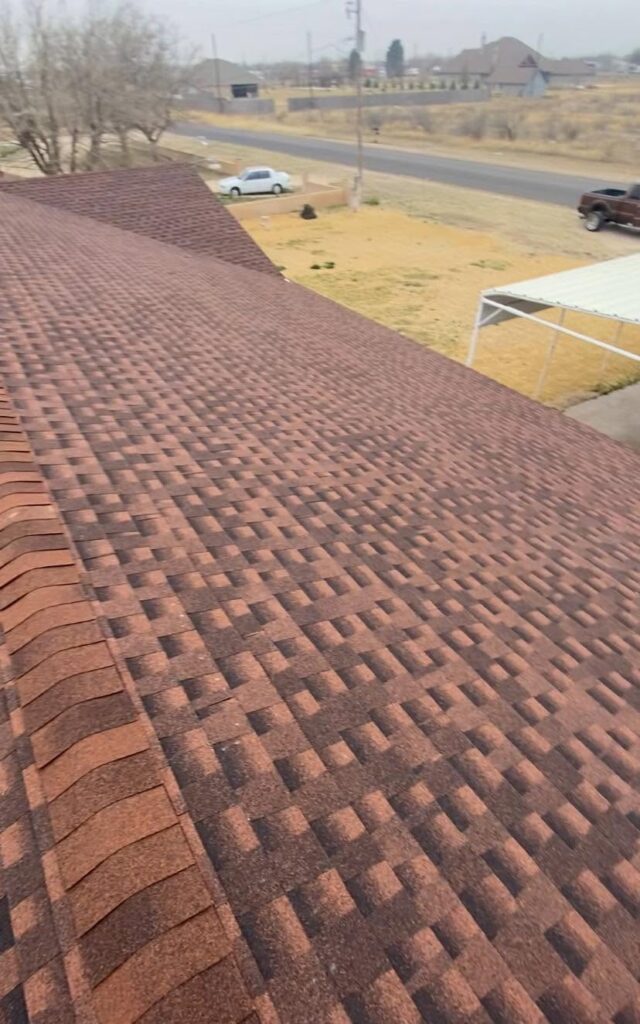
You can learn a great deal about shingle granule loss from the ground with a decent pair of binoculars and good light. Look at each slope in the morning and again in the late afternoon, since low angle light reveals surface irregularities that midday sun washes out. Healthy shingles show a consistent matte texture and even color. Problem areas appear as darker patches, lighter patches, or spots that reflect light with an oily shine. Scattered circular marks roughly the size of a coin usually indicate hail. Broad areas of thinning that follow the sun exposure of the house usually indicate age and heat. Blisters look like small craters with raised edges and are caused by moisture or gas trapped within the asphalt, often made worse by inadequate attic ventilation.
The condition of the shingle edges is just as telling as the field. Shingles nearing the end of their service life curl upward at the corners, cup in the middle, or develop a brittle feel that causes them to crack instead of flex. Once the asphalt has dried out enough to curl, the granules on that shingle are already loosely held and will continue coming off rapidly. Cracks that run through the full thickness of a shingle mean the fiberglass mat has failed, and no coating or sealant will restore it. Check the ridge caps and hip caps closely, since those pieces are bent over a sharp angle and always deteriorate first. Missing or split ridge caps allow water directly into the most vulnerable part of the roof. Any roof showing widespread curling combined with heavy granule loss is telling you clearly that its remaining life is measured in months, not years.
Do not climb up to inspect this yourself, and please do not pressure wash asphalt shingles. Walking on a heat softened roof presses granules deeper into the asphalt in some places and scuffs them off in others, and every step on a brittle aged roof risks cracking shingles that were still holding. Pressure washing strips granules wholesale and can void a manufacturer warranty outright. Algae streaking, which appears as dark vertical stains, is cosmetic and should be treated with an approved low pressure cleaning method, never a wand. If you need a closer look than binoculars provide, hire someone who carries the right ladder, the right footwear, and liability insurance. A professional inspection costs you nothing at PB Roofing and produces photographs of everything you cannot see from the yard. That documented evidence is worth far more than a risky trip up a ladder.
When Shingle Granule Loss Means You Need a Roof Replacement
There is a point where repair stops making financial sense, and shingle granule loss is one of the clearest indicators of where that point sits. Once granules are gone across a broad area, the exposed asphalt begins oxidizing rapidly under ultraviolet light, and that process cannot be reversed. Coatings marketed as granule restorers do not rebond mineral granules to aged asphalt and generally do more harm than good on residential shingles. If more than a small fraction of a slope shows bare asphalt, patching individual shingles simply moves the failure point a few feet over. Age matters here as well: a roof at eighteen years with heavy granule loss is at the end of its run, and spending money on repairs delays the inevitable at a poor return. A roof at eight years with the same symptoms deserves a warranty investigation instead.
Matching becomes a practical problem on older roofs even when a repair would otherwise work. Shingle colors are discontinued, product lines change, and a new shingle set into a twenty year old field will stand out sharply for the rest of the roof’s life. More importantly, the surrounding shingles are usually too brittle to lift without cracking, which means a small repair can create new damage in the process. Experienced crews can work around this on moderately aged roofs, but there is a limit. When the field will not tolerate being lifted, the roof has told you it is done. This is the reason we are honest with homeowners about which roofs are worth repairing and which are not.
Interior evidence changes the calculation immediately. Water stains on ceilings, dark spots on attic decking, damp or matted insulation, and any sign of mildew mean water is already getting through the system. At that point the concern extends past the shingles to the decking, the underlayment, and potentially the framing. Replacing a roof before the deck rots is dramatically cheaper than replacing a roof and rebuilding sections of deck at the same time. Planning ahead also lets you choose your timing rather than scrambling during peak storm season when materials and crews are stretched thin. Upgrading to impact resistant shingles during a planned replacement can also reduce what hail does to the next roof and may lower your insurance premium. Ready to plan a replacement on your schedule instead of the weather’s? Click here for our roof replacement service.
Why You Need a Professional Shingle Granule Loss Inspection in Odessa
Granule loss is the roofing equivalent of a check engine light. It tells you something is happening, but it does not tell you what, how urgent it is, or what the fix costs. A trained inspector reads the pattern, the location, the age of the system, and the condition of the attic together, and that combination produces an actual answer instead of a guess. Homeowners across Odessa, West Odessa, Midland, and the surrounding communities call us every year after finding grit in a gutter, and a meaningful number of those roofs turn out to be perfectly serviceable. Others turn out to have hail damage from a storm the homeowner never connected to their roof. Either way, you end up with photographs, a written assessment, and a clear recommendation. Free estimates with no obligation exist precisely so that nobody has to guess about this.
What a Professional Shingle Granule Loss Inspection Includes
A proper shingle granule loss inspection starts on the ground and works its way up. We look at the gutters, the downspout discharge, the soft metal surfaces, and the overall line of each slope before anyone sets foot on a ladder. Then we get on the roof and examine the field, the valleys, the ridges, the rakes, the eaves, and every penetration, checking flashing at chimneys, vents, and skylights along the way. Bruises get marked and photographed, blisters get distinguished from impact damage, and the sealant strips get checked for wind lift. Everything is documented with images you receive, not descriptions you have to take on faith.
The attic portion is not optional. From inside, we check for daylight through the decking, water staining, rusted fasteners, compressed or damp insulation, and the condition of the intake and exhaust ventilation. Ventilation problems explain a large share of premature granule loss in this area, and finding them changes the recommendation significantly. A roof shedding granules because the attic runs at extreme temperatures needs a ventilation correction as part of any work performed. Skipping that step guarantees the new roof ages the same way the old one did.
You receive a straightforward assessment at the end: what we found, what it means, what needs doing now, and what can reasonably wait. If the roof is fine, we tell you it is fine. If the damage looks like an insurance covered loss, we explain what we found and how the claim process typically works with your carrier. If a manufacturer warranty claim is the right path, we help gather what the manufacturer requires. No pressure, no scare tactics, and no invented problems.
Repair or Replace After Shingle Granule Loss
Repair is the right call more often than homeowners expect. Localized granule loss below a skylight, a handful of hail struck shingles on one slope, damaged ridge caps, or wind lifted shingles along a rake are all repairable conditions on a roof with life left in it. Good repairs restore the water shedding system without disturbing the rest of the field. Done correctly, they buy real years. Done poorly, they create new leak paths, which is why the crew matters as much as the materials.
Replacement becomes the better value when the loss is widespread, the shingles are brittle, the deck is compromised, or the roof is simply old. A tear off gives us the chance to inspect and replace bad decking, install fresh underlayment, correct flashing details that were wrong from the start, and fix ventilation deficiencies. Those hidden components determine how long the new roof actually lasts. Shingles get the credit, but the system underneath does much of the work.
PB Roofing applies the full cost of a repair as credit toward a future replacement, which removes the awkward incentive that makes homeowners suspicious of contractors. You are never paying twice for the same roof. That policy exists because we would rather earn a replacement later by being honest now than push a tear off that you did not need. Not sure which direction your roof needs to go? Click here for our roof repair service.
Why Choose PB Roofing for Shingle Granule Loss and Roof Replacement
PB Roofing is rated A+ with the Better Business Bureau and serves homeowners throughout the Permian Basin, including Odessa, West Odessa, Midland, Andrews, Big Spring, Monahans, Kermit, Pecos, Seminole, Lamesa, and Fort Stockton. We are a preferred contractor for both IKO and Owens Corning, which means access to quality shingle systems and the manufacturer backing that comes with proper certified installation. Local experience matters here, because our sun, sand, wind, and hail wear roofs differently than anywhere else in the state. We install for the climate we actually live in.
Every replacement job carries a four year labor warranty on top of the manufacturer material warranty covering the shingles themselves. That labor coverage protects you against installation issues, which are the source of most premature roof failures nationwide. We use the correct fastener pattern, the correct starter and ridge products, and the correct flashing details, because those are the parts that decide how long a roof survives. Cutting corners on any of them shortens the life of an otherwise excellent shingle.
Every project starts with a free estimate and no obligation, and every inspection produces documentation you keep. Call PB Roofing at (432) 853-7270 or email sean@roofingpb.com to schedule an inspection of your granule loss, and we will come out, get on the roof, and tell you honestly what is happening up there. Our office is at 13311 W County Rd 122, Odessa, TX 79765, and we would rather look at your roof today than repair your ceiling next spring.