
How Clogged Gutters Can Damage Your Fascia and Foundation
Summer storms in West Texas can drop a lot of rain in a short amount of time, and your gutters have one job when that happens. They move water off your roof and away from your home. When gutters clog with dirt, leaves, shingle granules, and windblown debris, that water has nowhere to go. It spills over the edges, backs up under your shingles, and pools around the base of your home. Two of the most expensive victims of this problem are your fascia boards and your foundation. Fascia rot leads to sagging gutters, pest entry points, and roofline damage that spreads fast in the heat. Foundation damage from pooling water can cost tens of thousands of dollars to correct. Cleaning your gutters is one of the cheapest forms of home protection available, and understanding the damage clogged gutters cause will show you why it matters.
How Clogged Gutters Damage Your Fascia Boards
Fascia boards are the long, straight boards that run along the lower edge of your roofline. Your gutters mount directly to them, which means your fascia takes the brunt of every gutter problem you ignore. When gutters clog, water backs up and sits against the fascia instead of draining through the downspouts. Wood fascia absorbs that moisture and begins to rot. Rotted fascia loses its grip on gutter fasteners, and the entire gutter system starts to pull away from the home. That gap invites even more water behind the gutter, and the cycle accelerates. Left alone, fascia damage spreads into your soffits, rafter tails, and roof decking.
Standing Water in Clogged Gutters Rots Fascia From Behind
Clogged gutters hold water like a trough, and that trapped water sits directly against your fascia boards for days or even weeks after a storm. West Texas heat does evaporate standing water quickly, but debris in the gutter acts like a sponge and holds moisture against the wood long after the surface looks dry. Fascia boards are usually made of pine or another softwood, and softwoods break down fast under constant moisture exposure. The rot often starts on the backside of the board where you cannot see it. By the time paint bubbles or wood grain splits on the visible face, the damage inside is already severe. Homeowners are frequently shocked when a board that looked fine crumbles under light pressure. Probing your fascia with a screwdriver once or twice a year is a simple way to catch soft spots early. If the tip sinks into the wood, the rot has already taken hold.
Overflowing water makes the problem even worse than standing water alone. When a clogged gutter fills during a heavy summer thunderstorm, water pours over the back edge and runs down the face of the fascia in sheets. That runoff strips protective paint over time and drives moisture into every seam, nail hole, and joint. Water also wicks upward into the roof decking edge where the fascia meets the roofline. Once decking edges soak up water, shingle nails lose their hold and the roof edge becomes vulnerable to wind uplift. West Texas wind gusts regularly exceed 50 miles per hour, and a loose roof edge is exactly where wind damage begins. A single clogged section of gutter can compromise several feet of roofline in one storm season. Repairing that damage costs far more than an afternoon of gutter cleaning.
Rotted fascia also opens the door to pests, and pest damage compounds the rot. Wasps, carpenter ants, and termites all target softened, moisture damaged wood because it is easy to chew through and nest inside. Birds and squirrels widen small rot holes into full entry points that lead straight into your attic. Once pests reach the attic, they damage insulation, wiring, and stored belongings. Rodent chewed wiring is a documented fire hazard that insurance adjusters take seriously. All of that risk traces back to a fascia board that stayed wet because a gutter never drained. Keeping gutters clear keeps fascia dry, and dry fascia keeps pests out. It is one of the simplest cause and effect relationships in home maintenance.
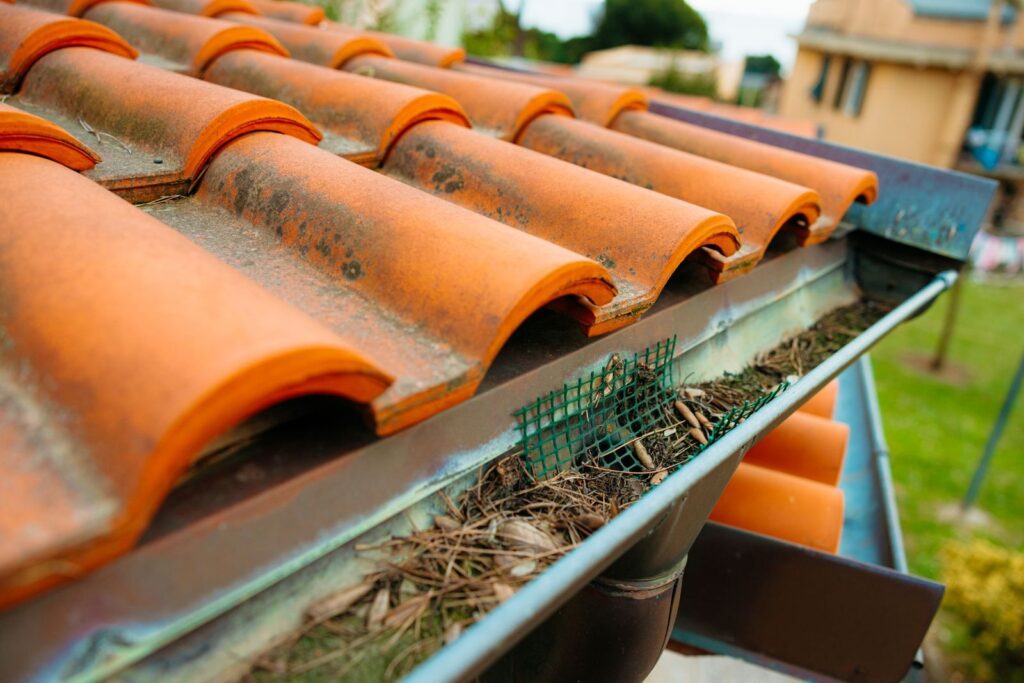
Sagging Gutters Pull Fasteners Out of Damaged Fascia
Wet debris is heavy, and clogged gutters can hold a shocking amount of weight. A single ten foot section of gutter packed with soaked leaves, dirt, and shingle granules can weigh well over 100 pounds. Gutter systems were never engineered to carry that kind of load. All of that weight transfers directly to the fascia boards through the hangers and spikes that hold the gutter in place. Healthy wood can resist that pull for a while, but fascia softened by moisture cannot. The fasteners begin to loosen, the gutter tilts outward, and the slope that carries water to the downspouts disappears. A gutter with no slope holds even more water, which adds even more weight. This is how one clog turns into a full gutter system failure.
Once a gutter starts to sag, water behavior changes across your entire roofline. Instead of flowing toward downspouts, water pools in the low spots and spills over at random points along the edge. Those overflow points dump concentrated streams of water onto your fascia, your siding, and the soil below. Sagging sections also create gaps between the gutter back and the fascia face, and wind driven rain pushes straight through those gaps. Water that gets behind a gutter runs down the wall cavity and can rot wall sheathing and framing. You may not see any of this from the ground. The first visible symptom is often peeling paint or a water stain on an exterior wall, and by then the hidden damage is extensive. If your gutters look wavy or uneven from the street, fascia damage is almost certainly underway. Need a professional to inspect your roofline edge? Click here for our roof repair service.
Replacing fascia is not a small patch job, and that is what makes prevention so valuable. Fascia replacement usually requires removing the gutter system, cutting out the rotted boards, and inspecting the rafter tails behind them. If rot has reached the rafter tails, the repair becomes structural and the cost climbs quickly. New fascia must then be primed, painted, and sealed before the gutters can be rehung with fresh fasteners. On homes where damage spread along the roof edge, sections of decking and shingles may need replacement too. Compare all of that labor and material against the cost of clearing your gutters twice a year. The math is not close. Routine gutter maintenance is the cheapest insurance your fascia will ever get, and it protects the roof edge along with it.
Fascia Damage From Clogged Gutters Spreads to Your Roof Edge
Your fascia does not exist in isolation; it is one piece of a connected roof edge system. The fascia, drip edge, starter shingles, and decking edge all work together to shed water at the most vulnerable part of your roof. When clogged gutters rot the fascia, the drip edge loses its solid backing and can pull loose. A loose drip edge lets wind driven rain slip underneath the first course of shingles. From there, water reaches the roof decking, and wet decking delaminates and loses nail holding strength. Shingles along the edge begin to lift, crack, and blow off during West Texas windstorms. What started as a gutter clog is now a legitimate roofing problem. Edge failures are among the most common starting points for widespread roof damage.
Water that backs up in clogged gutters can also work its way under shingles even before the fascia fails. During heavy downpours, a full gutter acts like a small dam at the roof edge. Water level in the gutter rises above the drip edge and pushes backward under the starter course. Roofing underlayment provides some protection, but it was designed to shed water flowing downhill, not to resist water pushing uphill. Repeated backflow events saturate the underlayment and the decking beneath it. Homeowners often discover this damage as brown stains on interior ceilings near exterior walls. Insurance companies frequently deny these claims because clogged gutters count as deferred maintenance. That means the repair bill lands entirely on you.
Catching edge damage early can save a roof that would otherwise need full replacement. A trained roofer can spot soft decking, lifted starter shingles, and compromised drip edge during a basic inspection. Small repairs at the edge, done promptly, stop the spread of moisture into the wider roof system. Ignore the edge, and rot creeps inward one rafter bay at a time. Once decking damage covers a large portion of the roof, patching stops making financial sense and replacement becomes the smart move. PB Roofing offers free, no obligation estimates on every project, so finding out where your roof stands costs you nothing. If your roof edge has gone past the point of repair, click here for our roof replacement service. Every repair we complete earns full credit toward a future replacement, so you never waste money fixing a roof you later replace.
How Clogged Gutters Damage Your Home’s Foundation
Your gutters and downspouts exist to control where roof water lands, and the answer should always be far away from your foundation. A modest 1,500 square foot roof sheds nearly 1,000 gallons of water during a single inch of rainfall. When gutters clog, all of that water cascades off the roof edge and lands in a narrow strip of soil right against your home. That concentrated soaking is exactly what foundations cannot tolerate. West Texas homes sit on expansive clay soils in many areas, and those soils swell dramatically when wet and shrink hard when dry. Repeated swelling and shrinking moves your foundation, and foundation movement cracks slabs, walls, and everything attached to them. Gutter maintenance is foundation maintenance, plain and simple.
Overflowing Clogged Gutters Erode Soil Around the Foundation
When water pours over the edge of a clogged gutter, it falls eight to ten feet and hits the ground with real force. That impact carves trenches in the soil along your foundation line, and each storm digs the trenches deeper. Eroded soil exposes the upper edge of your foundation and removes the graded slope that was built to carry water away from the house. Landscaping, mulch beds, and flower borders wash out along with the soil. Once the protective grade is gone, every future rainfall drains toward the foundation instead of away from it. The erosion problem feeds itself and gets worse every season. You can spot the warning signs easily: look for bare channels in the dirt, splash marks on the lower siding, and mulch scattered away from the beds. Those marks are a map of exactly where your gutters are failing.
Erosion also undermines the soil that supports concrete flatwork around your home. Sidewalks, porch slabs, patios, and driveway edges all rely on compacted soil beneath them. Overflow water washes that supporting soil out from underneath, leaving voids that the concrete eventually sinks into. Sunken and cracked flatwork creates trip hazards and drains even more water toward the house. Repairing settled concrete requires mudjacking or full replacement, and neither option is cheap. Splash blocks and downspout extensions cost only a few dollars and prevent most of this damage. None of those tools work, though, when the gutter above them is clogged and dumping water over the sides. Clean gutters are the first link in the entire drainage chain.
There is also a hidden erosion problem that happens below the surface. Water that saturates the soil against your foundation follows the path of least resistance, and that path often runs along the outside of the foundation wall. Moving water carries fine soil particles away with it, slowly creating channels and voids against the concrete. Those voids remove lateral support and give water a direct route to any crack or cold joint in the foundation. Homes with basements or crawl spaces see this as seepage, dampness, and musty odors. Slab homes see it as moisture wicking up through the concrete and damaging flooring. By the time symptoms show up indoors, the water has been working underground for months. Stopping roof overflow at the gutter is far easier than chasing water once it goes subterranean.
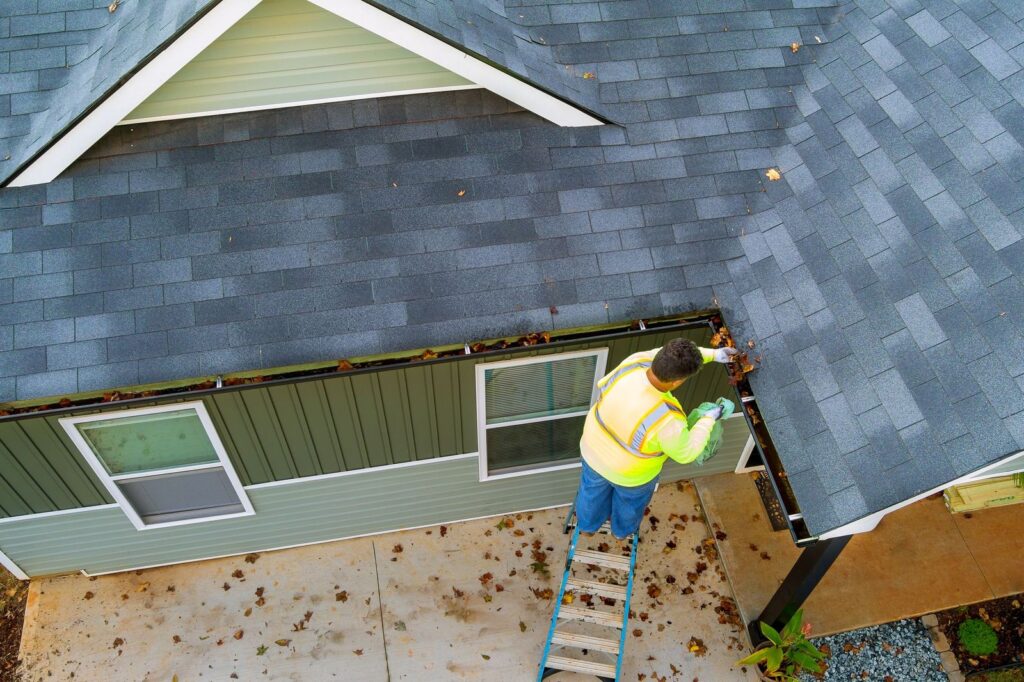
Water Pooling From Clogged Gutters Cracks Foundation Slabs
Expansive clay soil is the defining foundation challenge across the Permian Basin, and clogged gutters make it dramatically worse. Clay soil can swell significantly in volume when it absorbs water, then shrink again as it dries in the summer heat. When a clogged gutter dumps water along one side of your home, the soil on that side swells while the rest stays dry. That uneven moisture creates uneven pressure, and the foundation lifts on the wet side. Weeks later the soil dries and shrinks, and the foundation settles back down. Every cycle flexes the concrete slab like a slow bending motion. Concrete has excellent compression strength but poor flexing strength, so cracks form. Once a slab cracks, the two sides can move independently, and the damage becomes progressive.
Foundation movement announces itself throughout the house long before you see a crack in the concrete. Doors start sticking or swinging open on their own. Windows bind in their frames and become hard to open. Hairline cracks appear in drywall, usually radiating diagonally from door and window corners. Floors develop slopes or humps you can feel underfoot. Brick veneer shows stair step cracks along the mortar joints outside. Many homeowners blame these symptoms on the house settling, but repeated symptoms on one side of the home often point to a drainage problem above. Walk outside during the next rainstorm and watch your gutters. If water is sheeting over the edges on the same side where your doors stick, you have found your culprit.
Foundation repair is one of the most expensive projects a homeowner can face, and drainage problems are a leading preventable cause. Pier and beam adjustments, slab piers, and pressed pilings routinely cost thousands to tens of thousands of dollars. Foundation issues also complicate home sales, since buyers and lenders treat foundation reports with heavy scrutiny. Compare those stakes against the cost of gutter cleaning and a couple of downspout extensions. Prevention wins by a landslide. Make gutter checks part of your seasonal routine, especially before West Texas storm season peaks. Your foundation will never thank you out loud, but your door frames, drywall, and resale value will show the difference.
Clogged Gutters Push Water Into Basements and Crawl Spaces
Homes with basements or crawl spaces face an additional threat from clogged gutters: direct water intrusion below grade. When overflow saturates the soil against the foundation, hydrostatic pressure builds against the below grade walls. Water under pressure finds every crack, tie hole, and porous section of concrete or block. Basements develop seepage along the floor joint and damp streaks down the walls. Crawl spaces collect standing water that has no easy way to evaporate. That trapped moisture raises humidity throughout the entire house, because air from the crawl space rises through the living space. Musty smells, damp carpet edges, and condensation on ductwork are all downstream symptoms of gutters that stopped doing their job.
Moisture below your home creates biological problems on top of the structural ones. Mold colonizes wet wood framing, subflooring, and insulation within days of saturation. Wood destroying fungi attack floor joists and sill plates, softening the structure that holds up your floors. Termites are drawn to damp wood and moist soil, and a wet foundation perimeter is an open invitation. Mold remediation and structural wood repair are invasive, disruptive, and expensive projects. Indoor air quality suffers too, which matters for anyone in the home with asthma or allergies. Every one of these problems traces back upstream to water that should have exited through a downspout. Dry gutters mean dry soil, and dry soil means a dry crawl space.
The fix starts at the roofline, not in the basement. Waterproofing paints and interior drains treat symptoms, but they do nothing about the thousands of gallons still being dumped against your foundation each storm. Clear the gutters first, confirm the downspouts discharge at least four to six feet from the house, and restore the soil grade so it slopes away from the walls. In most cases, those steps alone dry out a chronically damp foundation perimeter. While you are evaluating your drainage, have your roof edge inspected at the same time, since clogged gutters usually leave damage there too. Gutter problems and roof problems travel together. Solving both at once saves you a second round of ladder work and contractor visits.
Why You Need a Professional Roof and Gutter Inspection This Summer
West Texas summer storm season is exactly when clogged gutters do their worst damage, and it is also the best time to get ahead of the problem. A professional inspection catches fascia rot, edge damage, and drainage failures before they turn into structural repairs. Roofers see the parts of your gutter system that you cannot evaluate from the ground. They can tell you which problems are cosmetic and which ones are actively costing you money. An inspection also documents your roof’s condition, which strengthens any future insurance claim after hail or wind. PB Roofing provides a free, no obligation estimate on every project, so there is no financial risk in finding out where you stand.
A Professional Inspection Finds Hidden Clogged Gutter Damage
Much of the damage caused by clogged gutters hides where homeowners never look. Rot starts on the backside of fascia boards, behind the gutter itself. Water stains form on decking edges under the shingles. Fastener pull out happens gradually and invisibly until the gutter suddenly sags. A professional gets on the roof and examines all of these areas directly. What looks fine from your driveway often tells a different story up close.
Trained roofers also read the secondary evidence that untrained eyes miss. Shingle granules piled in gutters signal roof surface wear. Rust streaks reveal where water has been standing. Efflorescence on foundation walls maps out chronic soil saturation below. Each clue points to a specific fix, and an accurate diagnosis prevents wasted money on the wrong repair. That diagnostic skill is the real value of a professional visit.
Timing matters, and midsummer is a smart window for an inspection. Spring storms have already stressed your roof edge, and the biggest hail and wind events of late summer are still ahead. Fixing fascia, drip edge, and gutter slope problems now means your home enters storm season watertight. Waiting until damage appears indoors means paying for interior repairs on top of exterior ones. Prevention is always the cheaper invoice.
Prompt Repairs Stop Gutter Damage From Reaching Your Foundation
Every gutter related problem gets more expensive the longer it runs. A soft fascia board this month becomes rotted rafter tails by next year. A minor soil washout this summer becomes a foundation crack after a few more storm cycles. Early repairs break that chain at the cheapest possible link. Spending a few hundred dollars now routinely saves many thousands later. That trade is the entire logic of home maintenance.
Prompt repairs also protect your insurance position. Adjusters distinguish sharply between storm damage and deferred maintenance, and clogged gutters fall squarely into the second category. Damage that traces back to neglected gutters is frequently excluded from coverage. A documented history of maintenance and timely repairs keeps your legitimate storm claims clean. Your policy protects you best when your maintenance record backs it up.
There is a comfort factor too, and it is worth something. Homeowners with known roof and drainage problems dread every dark cloud on the horizon. A repaired roofline and free flowing gutters let you watch a thunderstorm without a knot in your stomach. Your home sheds the water the way it was designed to. That peace of mind lasts all season long.
Why Choose PB Roofing for Gutter Related Roof Damage
PB Roofing serves Odessa, Midland, and communities across the Permian Basin with honest, accountable roofing work. We hold an A+ rating with the Better Business Bureau, earned through years of straight answers and finished promises. We are a preferred contractor for both IKO and Owens Corning, two of the most trusted shingle manufacturers in the industry. That status reflects verified training and workmanship standards. When we assess gutter related damage to your fascia or roof edge, you get an honest report, not a sales pitch.
Our warranty and pricing policies are built to protect you. Every replacement job carries a 4 year labor warranty, so our workmanship is backed long after the crew leaves. Every project starts with a free, no obligation estimate. Our roof repairs are paid forward, meaning the full cost of any repair is credited toward a future replacement. You never lose money by fixing your roof the right way today. Few contractors anywhere offer that kind of guarantee.
We are local, and that matters in West Texas roofing. We know how Permian Basin heat, wind, hail, and clay soil punish homes, because we work on them every day. Planning a new build or an addition? Click here for our roof installation service. If clogged gutters have damaged your fascia, roof edge, or drainage, do not wait for the next storm to make it worse. Call PB Roofing today at (432) 853-7270 or email seanjr@roofingpb.com for your free estimate.